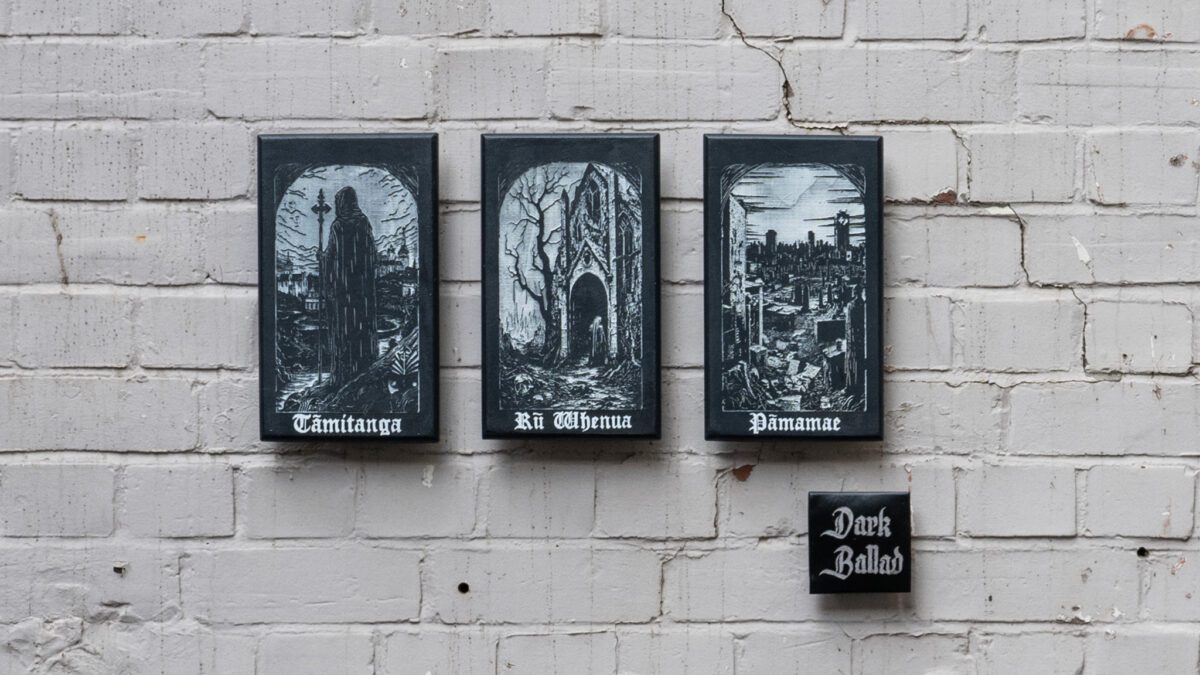
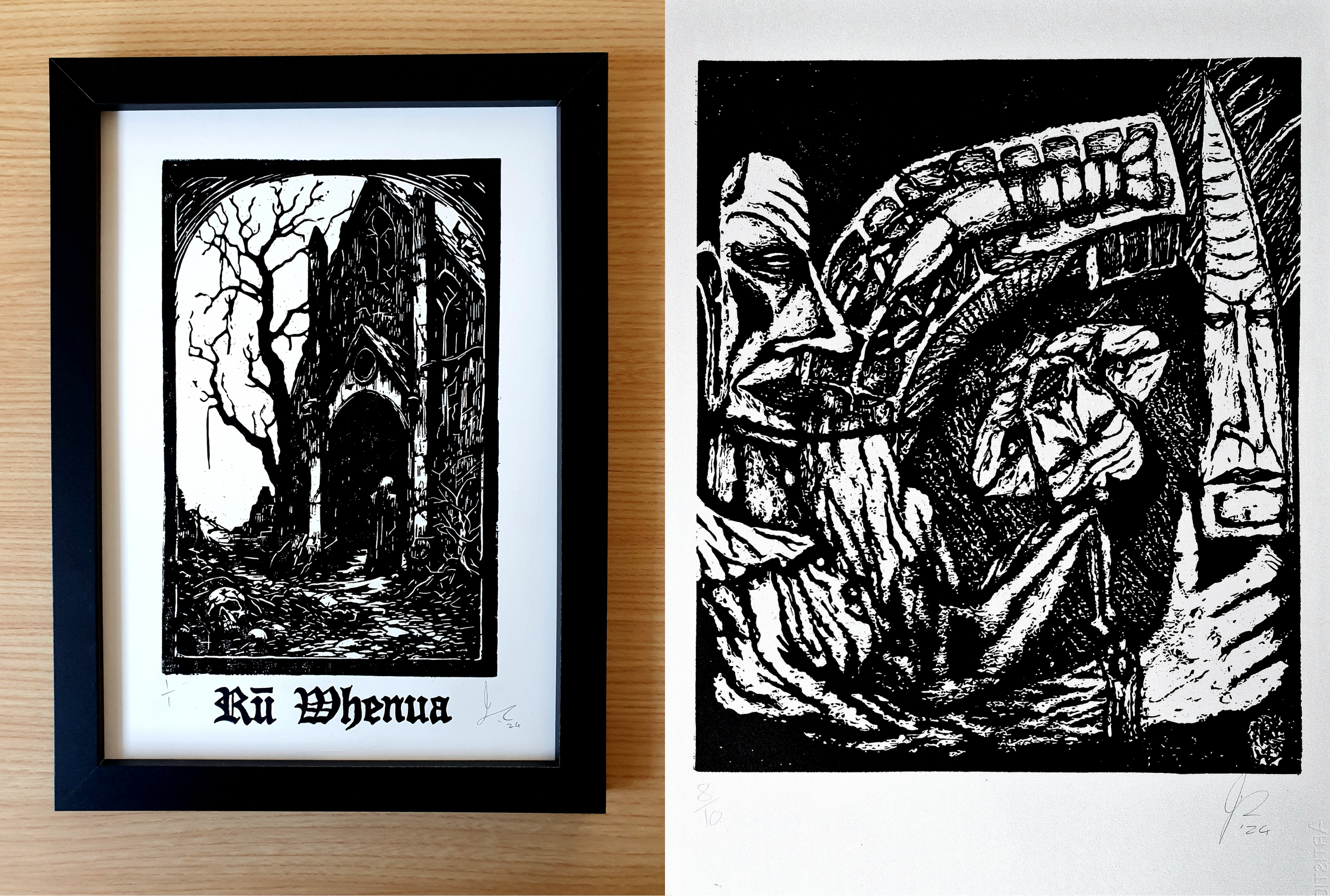
With a unique aesthetic and process for the world of urban art, Dark Ballad has established himself through a series of striking works across Ōtautahi, including gothic-inspired paste-ups and a woodblock tablet series for the 2023 Little Street Art Festival, as well as an ever-expanding collection of collaborations that range from prints to t-shirts. Working with figures from the worlds of fine arts and graffiti, these collaborations are always fresh, and through their ultimately one-of-a-kind woodblock printed aesthetic and finish, they are retain a key point of difference from more mass-produced clothing offerings. In addition to his technical output, Dark Ballad has also been involved in community arts initiatives, including curating the Carve surfboard art trail in New Brighton for the Duke Festival of Surfing in early 2025, a public art installation featuring over a dozen local artists. With such a wide range of activity, we thought it was well overdue we sat down with the ‘Master of the Dark Arts’ for a chat about his experiences, his philosophies and what might come next…
You’ve just released a rad collab with PK, a series of prints and t-shirts that draw on his ubiquitous graffiti, but it is just one of a longer series of collaborations that you’ve done where you’ve worked with local artists from the fine art world to the graffiti scene. What does that process of collaboration typically look like?
Dark Ballad: Well, I started once I discovered I could print t-shirts, and they would behave like a screenprint in the wash. I could get basically a full screenprint style shirt, but with the woodcut elements. Once I figured that out, I went full force on them because they’re easier to sell. I think lots of people would rather wear art than have a static thing on their wall. I just started printing my own designs, demons and very horror and pop art images inspired by a lot of movies and music and stuff like that. I started off doing printmaking at Ara and I met a lot of people. Then as you do with your art friends, you sit around and draw, but usually those drawings just get filed away or thrown away. I thought like, why? These are awesome, you know, I can edit them and Photoshop them to be a woodcut. So, I did that and then I’d make these colour woodcuts, and maybe they would go in an exhibition, or they would go in the folder. So, then once I discovered that I could print t-shirts, the first one I did I think was with Priscilla Rose Howe, which was pretty awesome working with someone as successful as her. She just came over and did a basic sketch, I worked it into a woodcut and added all my grain and all the ‘woody’ elements. That sold really well, much more than any of my prints ever have in an edition. So, then it was all full steam ahead from there. When Klaudia [Bartos] was featured in SHIFT at the Canterbury Museum, I knew I had to be a part of that world as well, because it was amazing, all the connections, the freedom of it, you know. It made the sterility of exhibitions feel old, seeing the art all over the walls in the Museum, so I decided I needed to make more connections with the graffiti world and become a part of it all. So, since then, I’ve been doing my own street art stuff but also focusing on these collabs with my woodcut work and tying it all together. I just keep meeting cool people, like, a bunch of the younger graffiti guys and just through hanging out, I found that they all wanted to find new avenues for their graffiti to reach more people and to make some money from their art.
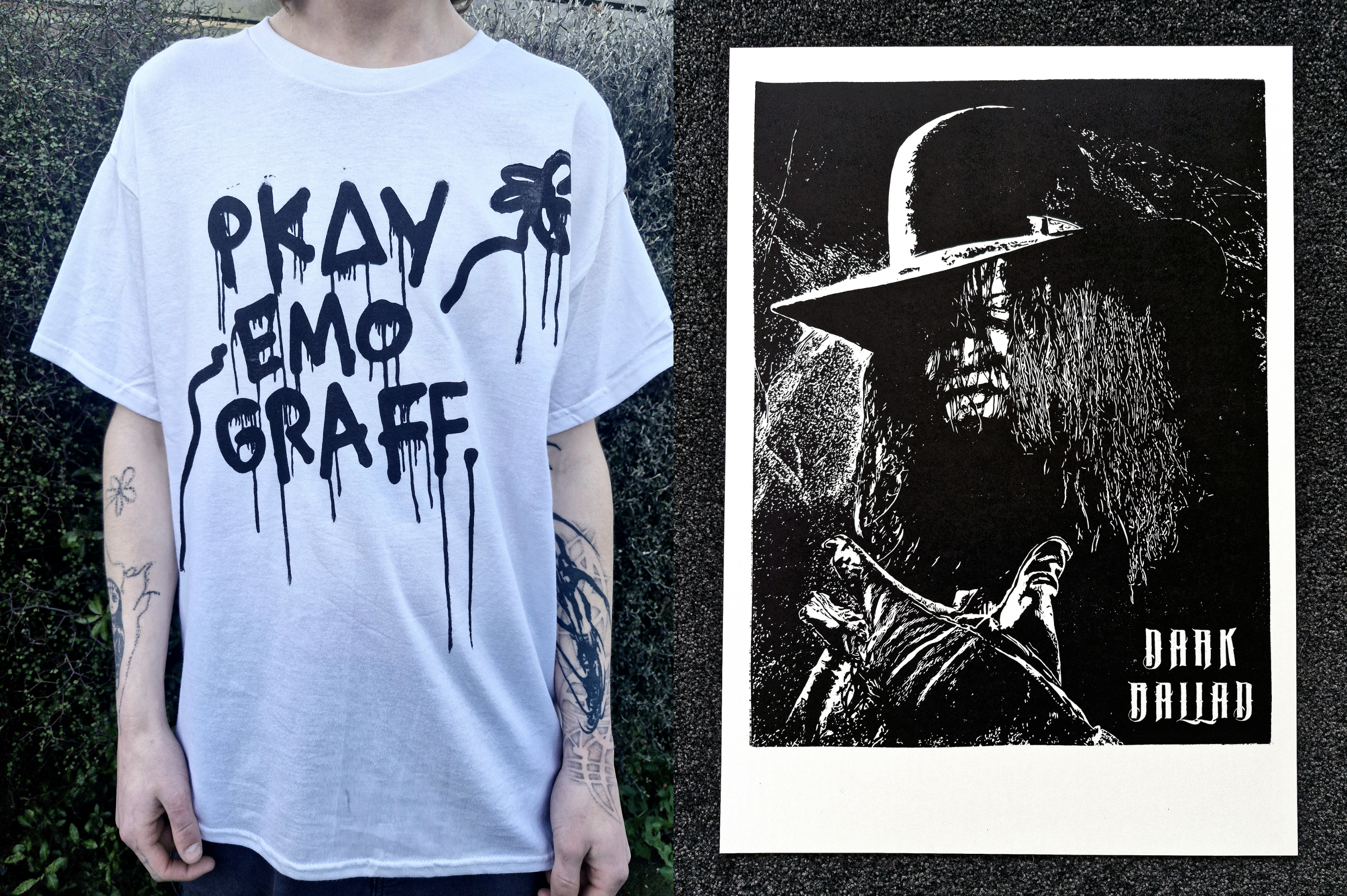
T-shirts are perfect, because they offer a sense of expression and a connection to a culture, a world, a way of thinking, right? In these collaborations, how do you negotiate the relationship and add your own touch to the work?
Dark Ballad: With the friends that we’ve made, like, the most recent collabs have all been about the connection with the artists as people. I want to work with them to help us both, you know. A lot of the time I will pretty much just translate what they’ve given me into woodblock, or maybe just with a small addition of mine. The printmaking and printing and bleaching the shirts is my part of the collab, I guess. But sometimes, like with the Skam and Hambone collabs, they gave me their original drawings and I ‘zombified’ them, because that’s the Dark Ballad style, you know. I don’t want to edit someone’s piece just to shoehorn my way in there, the carving, printing and the shirt making itself is my part of it.
There’s also knowledge, I think, when you’re working with woodblock that your hand is intimately connected, you’ve literally carved it, so there is inherently that really meaningful contribution. We’ve seen a lot of studios that specialize in print collaborations and releases, do you see this as a way for you to establish yourself in that regard, as a print studio? Obviously, rather than screen or digital printing, you’ve got this more traditional form that offers its own kind of aesthetic and makes it unique…
Dark Ballad: I’ve been thinking about that a lot, not as a factory, but like a studio to come to for people who want something a bit different than ordering a bunch of vinyl or direct to fabric printing. We can do stuff that has the same quality as a screenprint, but you get to work with me one-on-one to develop the idea and add things in the process. A lot of the time people just give me their drawing and I’m so excited to work with them that we just split it 50/50. I’m not getting rich off it, but to have these collabs on my resume and the awesome connections I’ve made, that’s what is so cool about it. I think of it as a unique way to make a shirt that’s more about having a relationship with another artist, it’s art and it is fashion, it’s like dipping your toes into every world.
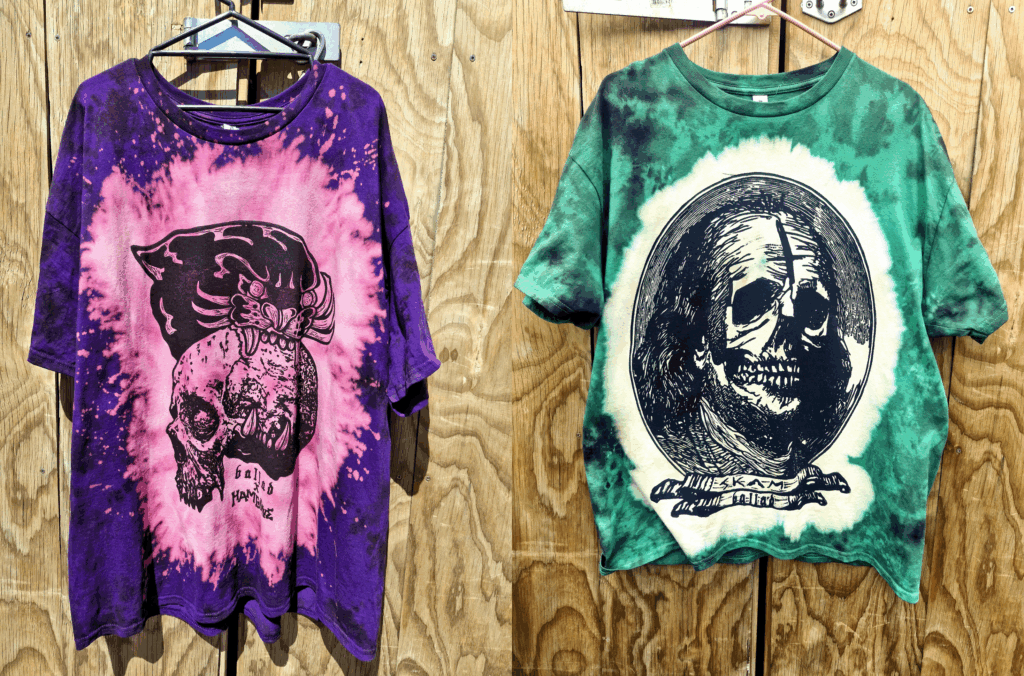
It’s important to acknowledge that the t-shirts are one-of-kind pieces, the process of bleaching and woodblock printing means they’re always going to be unique, right?
Dark Ballad: They are. For example, there might be a little bit of accidental inking of a bit of wood that comes up, and I don’t try to get rid of it. When I’ve done things for Leather Jacket Records and Flying Nun, they explicitly asked me to leave in every little mistake, so it looks like a woodcut. But then other people, like Orgn, when we did our two throws, I didn’t want there to be any schmootz in it. I wanted it to look exactly as he would paint it because he’s so clean. I wanted it to look like that. That’s the thing with woodblock is, unlike a screenprint, it’s not going to be the same thing every time. Each print is slightly and sometimes wildly unique because of the fully manual process of it. I love screenprints, I still do them sometimes myself, but it’s too clean. It’s almost digital. To me, a screenprint is not cheating, but, like, it’s not art to me, like a woodcut is, because I carved it. When you look at a screenprint closely, it looks pixelated. There’s a little bit of pixelation in it because it’s coming out of little holes, whereas the woodcut is the exact physical thing printed on the shirt as it is carved. It’s a little bit of snobbery, but I’ve been honing that skill pretty much exclusively for ten years, it is my practice, so I’m going to say it’s more artistic, haha!
Additionally, you also often use upcycled garments, right? Is that a conscious decision?
Dark Ballad: Yes. Anytime I get an op shop shirt, one that’s the right colour and not destroyed, I’ll use that because usually they are better quality and people often prefer the fit as well. So, we still go to op shops all the time to source our stuff. We do get donated stuff too, shirts from Monotone Repeat at the Boxed Quarter — she makes her own t-shirts from scratch and donates them. Ultimately, I think of the t-shirts as pieces of art and as such an antithesis to fast fashion. Sometimes, there’s no way around buying in bulk, but I try to avoid it whenever I can.
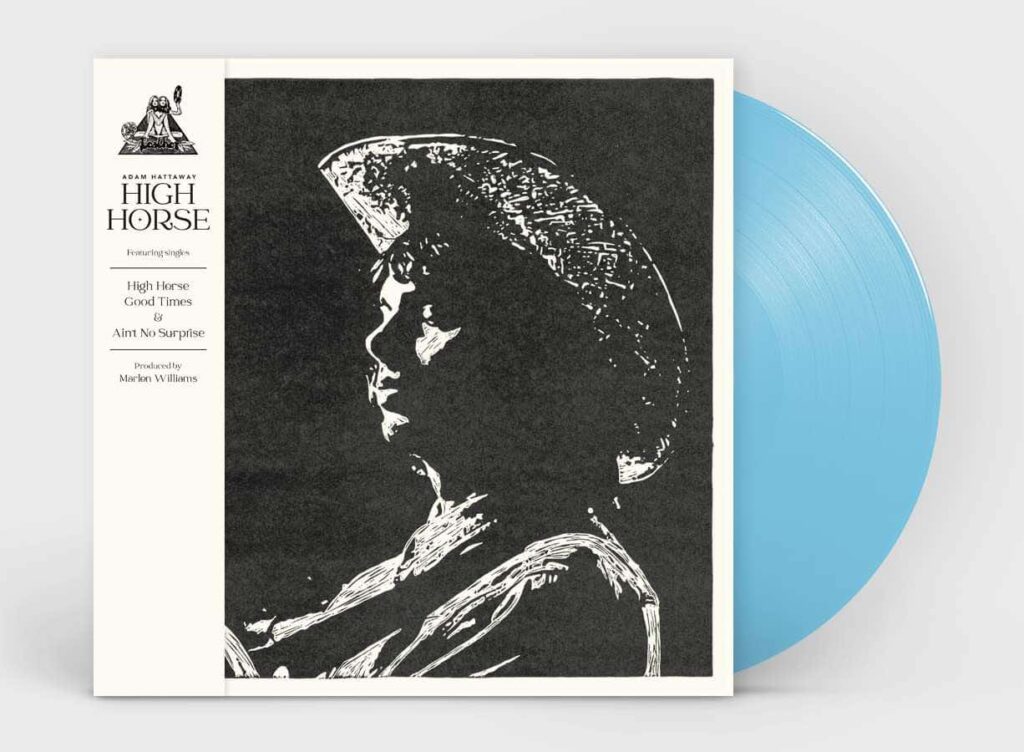
You mentioned your work with Flying Nun and Leather Jacket Records. You’ve created a few album covers, for artists like Adam Hattaway and a few others, how did that relationship come about?
Dark Ballad: It’s definitely one of my favourite things to do. You can get your work around the world, get so many more eyes on it. The relationship came about because Matthias, who runs Leather Jacket Records, used to work at a place called Blast from the Past in Cathedral Junction, a retro game shop. I brought in like three or four rubbish bags of old game consoles, I don’t think any of them worked, but he gave me money for them! I dragged them from Ara to the shop, but ever since then I used to go there all the time, just being a nerd. Then I worked there for a bit as well. Eventually, he moved into the A.V. Club on New Regent Street, and then started Leather Jacket Records there, which was focused on local recordings. He started reissuing Flying Nun things and I did the cover for Aversion by the Sundae Painters, the first single from their album. This was before Hamish Kilgour died, so I got to meet him, we hung out and he was an absolute character! The artwork was of three faces of people from The Shining, although it doesn’t really look like it. It’s cool to know that my horror stuff is still sneaking into things! Ever since then, if there’s something that suits, I’ll do an album cover. I’ve got two waiting to come out for some older bands. So yeah, it is really exciting that I’m able to do those types of things, dipping my toe in every pool, which works because printmaking is so versatile.
You have been able to put your work into all these different realms, but I imagine the more challenging transition might have been how to take printmaking into the streets. The most obvious approach would be paste-ups, there’s a lineage through the likes of Swoon, but what were your influences for making art in the streets?
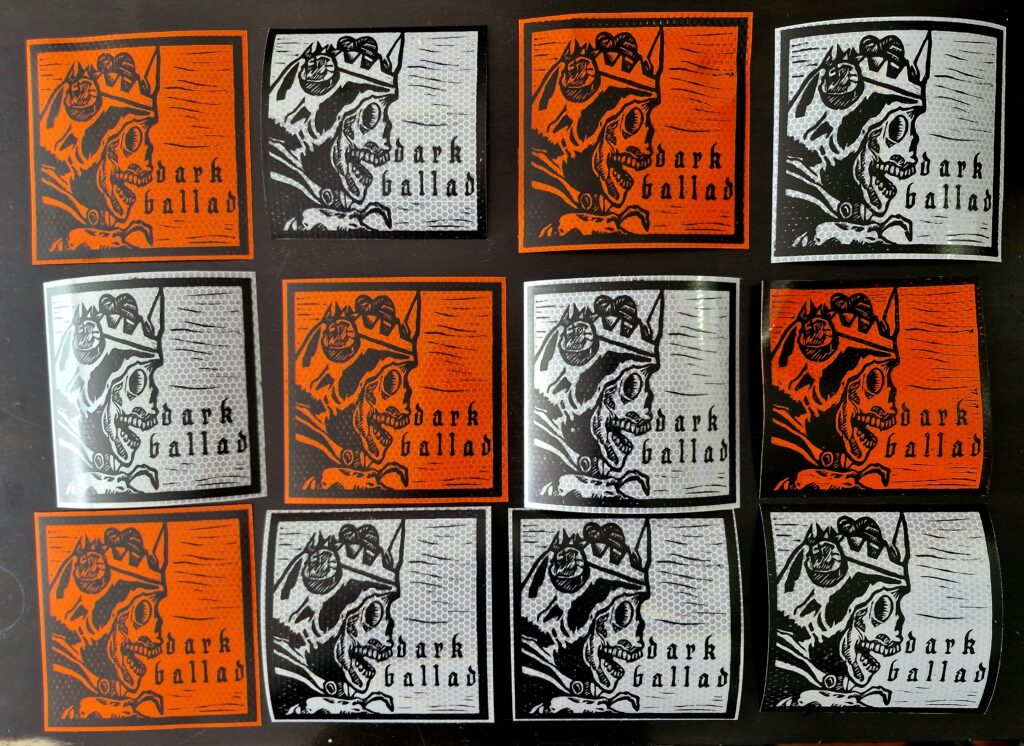
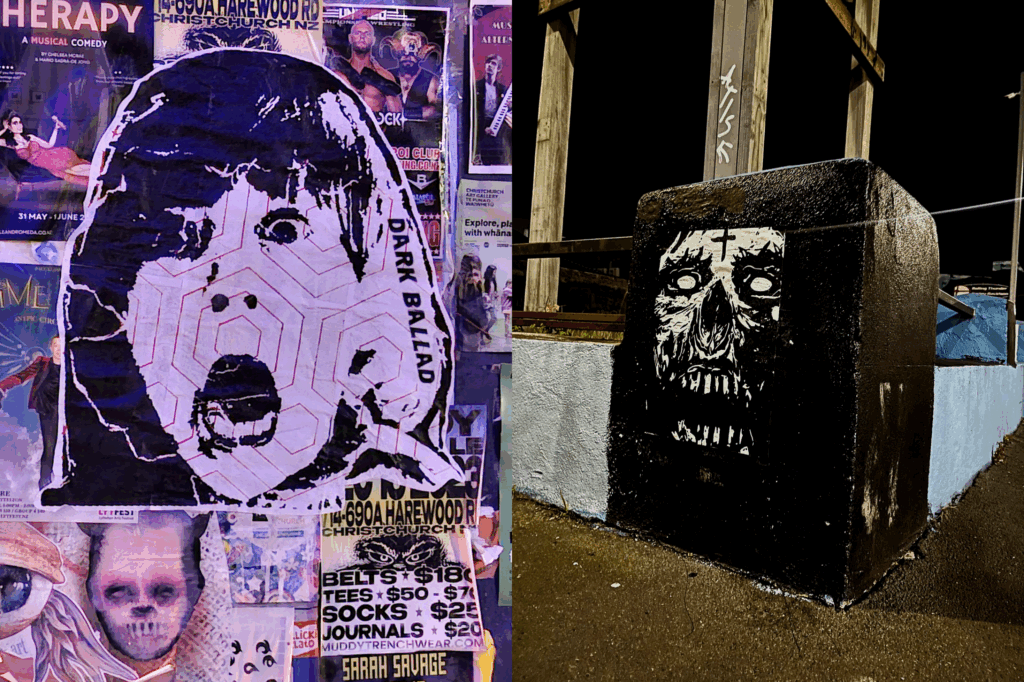
Dark Ballad: We started with just normal hand-drawn stickers. We’d spend all night drawing all of these stickers, but I’m so slow with it that I’d only get like three stickers out of any one night. I’d go put them up and then two weeks later they’d be gone. So, I needed to find a way to make them quicker. And then I thought, I’ve got the press, so I started doing big woodcut stickers. But there was nowhere to put big stickers, so I thought, what can you put anywhere? Paper. Then I saw stuff at SHIFT, there was tons of paste-up stuff. I didn’t actually print the woodcut and put it on the wall, because the paste would just make the ink run. I would take my biggest, scariest heads and use the printer at work. I don’t know if I was allowed to print as many A3 sheets as I did, but I just stuck them together. It was super simple, super cheap, wheat paste is cheap. I wanted to do graffiti as well, but I didn’t want to do writing on a piece of paper and paste it up because that couldn’t be more of a poser thing to do. It has to be the thing that I’m good at and go big on the wall. So that’s where the paste ups came from. But since then, I’ve transitioned back into smaller stickers on hi vi stickers with the press because it’s infinite, the MDF is so cheap and easy to use. We’ve got thousands of woodblocks at home, and we just have big print sessions. Even some of the die-hard graffiti guys have started making stickers themselves and loving it, so now any chance I get, I’ll slip in a cheeky “stick to stickers” to them. Wherever you see an orange or white hi-vis sticker much brighter than any other sticker on the street, you’ll know where they came from!
Talking about evolution, what are your goals in terms of expanding your practice and further pushing the boundaries of the craft?
Dark Ballad: Because of the way printmaking has to dry, there’s a lot of old worldy kind of stuff still attached to it, you know. It’s such a super ancient, traditional thing that they still haven’t invented ways to make it quicker. The Little Street Art Festival has made me interested in the carving elements, like I could use big carvings and have them in windows and things like that. But most of my focus is on collaborations and helping other people learn the craft and apply it in street art and in money making avenues.. Every woodcut looks the same if it’s done traditionally. To me, it’s cool, it’s detailed, it’s awesome. But it’s so ancient. I want to modernize it a bit in terms of the look, and the t-shirts and graff-styled stickers are a good way to do that.
As art objects, and as we discussed the t-shirts are one-of-a-kind art pieces, I feel like they are also an obvious part of urban art culture, they are like walking billboards, using your own body as a public platform and as such, making a public statement or expression.
Dark Ballad: Sometimes I’ll go to someone’s house who has a lot of art and it’s cool. But then when I see someone wearing a sick super tie-died shirt with bits sewn on, or hand-painted by someone, I’m much more impressed. I’m looking at them walking around all day and all night and that shirt is constantly in my mind. The art on the walls of a house, I forget about that once I walk out. Then, like six months later, that cool shirt might have faded to oblivion, and I love that too. The wearing of a piece of clothing adds a warmth, a vintage, lived-in feel, I love the ‘wearability’.
There’s less preciousness about the endurance of it. Which is the same as something on the streets…
Dark Ballad: Yeah, exactly. Like the faded pieces and throws after a while and how they might be buffed but you can still see them underneath. I love that. Wear and tear.
With everything you have done over the last few years, what have been some highlights for you?
Dark Ballad: The Little Street Art Festival really put the fire into me because I had only really just started making street art and it gave me that opportunity. It went really well, so I thought, there’s no way I can let that momentum die down. Having done like 15 or so collabs with artists who I could never have thought I’d even meet, including international artists, and just being accepted. Growing up I wasn’t really accepted into too many groups or communities. I was never in the cool group. So, now it’s rad to be accepted wholeheartedly into a group of people who are so non-judgmental, and who have been so keen to collaborate with me, someone who was a beginner at first. I had that printmaking background where I had expertise in something else, so people wanting to be part of my world as much as I wanted to be part of theirs is really cool. Exhibitions like Roll Call, the album covers — it’s all been great. And it’s been more fun and easier than I thought to get involved with stuff like this. I thought after I left art school that it would be the odd exhibition here and there, and, you know, dealing with the people of the art gallery world. It is tricky here in Christchurch, you had TyanHouse, which was sick, but it’s gone, Masked Artist Gallery is closing, Fiksate is closing, and those were the exhibition places that connected with the younger more alternative art crowds. But the way I’m doing it, with the t-shirts, galleries aren’t as vital, they can be everywhere.
It is an interesting point that you make about the changing city, and what’s out there, because Ōtautahi has built this reputation as a street art destination, but seeing places close, it’s a reminder that there is a whole ecosystem to any culture. And the work you have been doing, it’s a really important part, bringing people together and creating new avenues. The other experience that I want to talk to you about, which is similarly connecting people, is your work curating and staging the surfboard trail for the Duke Festival early in 2025. How was that as an experience? You were dealing with a lot of different artists, who maybe hadn’t necessarily been part of an event like that before. You also took a brave step in terms of engaging people that the public may not necessarily identify with…
Dark Ballad: The whole idea came after the Little Street Art Festival: it had something that was both graffiti and street art, and people came from these different worlds. I was inspired by hanging out with these fine artists, graffiti artists, and seeing how everyone was getting on because it’s all just art in the end. Once you put aside that snobbery of hating this or hating that because it’s not what you do, it really was just about people putting their stuff out and it looking cool. I wasn’t really thinking about the public perception. I just said, you know, who have I met? Who do I like? Who do I see? Who’s local? It was rad seeing all of them say yes right away. We weren’t paying a lot of money, so I thought I’d get a lot of “no’s” from people. As long as I had those artists keen and for sure doing it, then I knew I could just go from there. We got the funding and then it was just about putting it together. I mean, even if it didn’t go exactly as I planned, we still had 18, 19 surfboards from these artists that I love. Even if we couldn’t put them out how I envisioned them, I would have found a way to do something.
And it always helps, I think, when you’re doing something in your own community, right?
Dark Ballad: Yeah, definitely. I’ve lived all my life in New Brighton. I was in Bexley before the earthquakes, we got red zoned, then moved to North Beach. I have been coming to New Brighton forever, I remember how it was back in the day, and I watched it change and decay and come back and decay again over and over and over. The ruins of those times are still these pieces that get covered and then uncovered again from buildings getting demolished. I wanted to utilize that space instead of just having a show. I wanted to put these things in spots and have them mean something to that spot and mean something to the person. There was a broad brief, but I really wanted it to mean something to the locals.
I think a personal favourite was the ‘PK Loves Chanakya’ board. [Chanakya is a local South Indian restaurant] Lastly, how can people get their hands on the t-shirts and prints?
Dark Ballad: Just go to my Instagram, I’m very good at messaging back! You can also go to my website, or talk to any of the collaborators and they’ll send you my way. The new PK t-shirt will also be available at Rinleys!
Go get them!