As we enter summer, excitement grows at Watch This Space as we begin the build to our favourite event – The Little Street Art Festival! 2026 will mark the fourth year of the LSAF, Aotearoa’s most unique urban art festival – a celebration of the possibilities of urban creativity: the scale, material, conceptual diversity, and ultimately, the way art can be embedded within the cityscape to create meaningful encounters. In anticipation of our upcoming event, we wanted to recap 2025 – from overly officious signs to rounds of golf, symbols of navigation to creative robots, creeping creatures to antitheses to fast fashion and circular scripts, it was a year of fascinating additions to Ōtautahi’s urban terrain.
The Little Street Art Festival has proudly presented fresh rosters in each of its iterations, serving as a platform for familiar and fresh names and 2025 saw seven headline artists and two ‘Fresh Faces’ produce work. While the festival provided no explicit curatorial framework, the various projects developed by the artists explored a range of ideas to reveal the complexities of the urban landscape and the role creativity can play in unearthing lines of discourse.
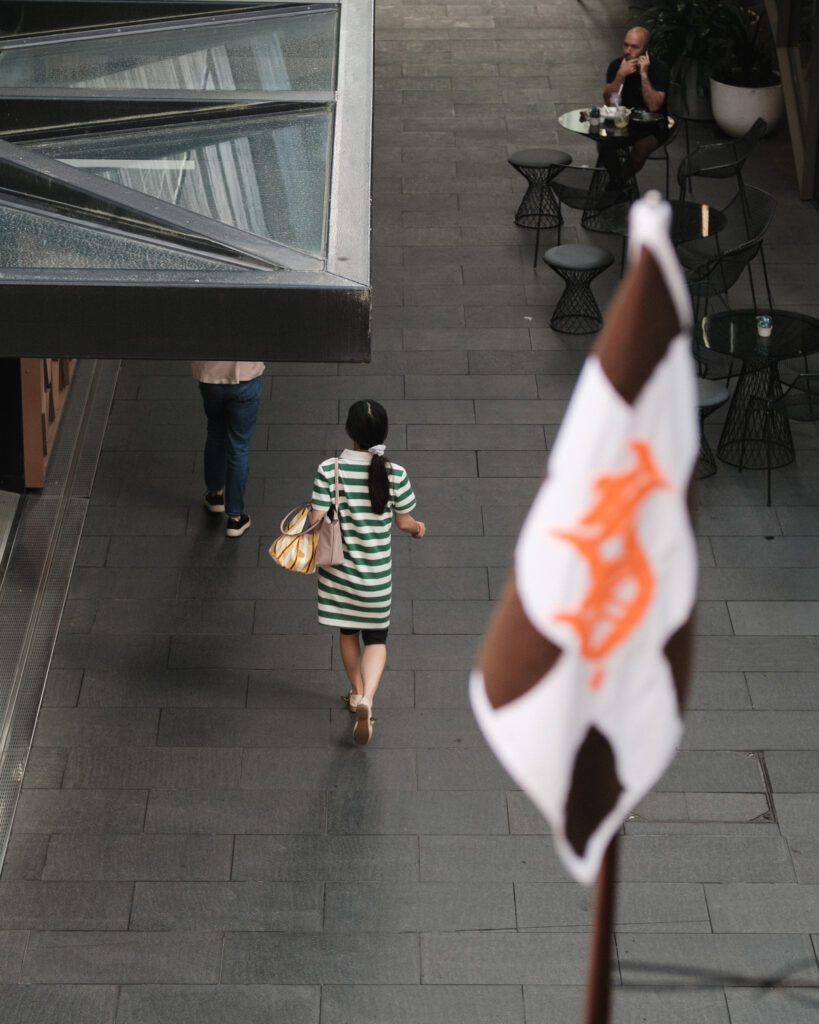
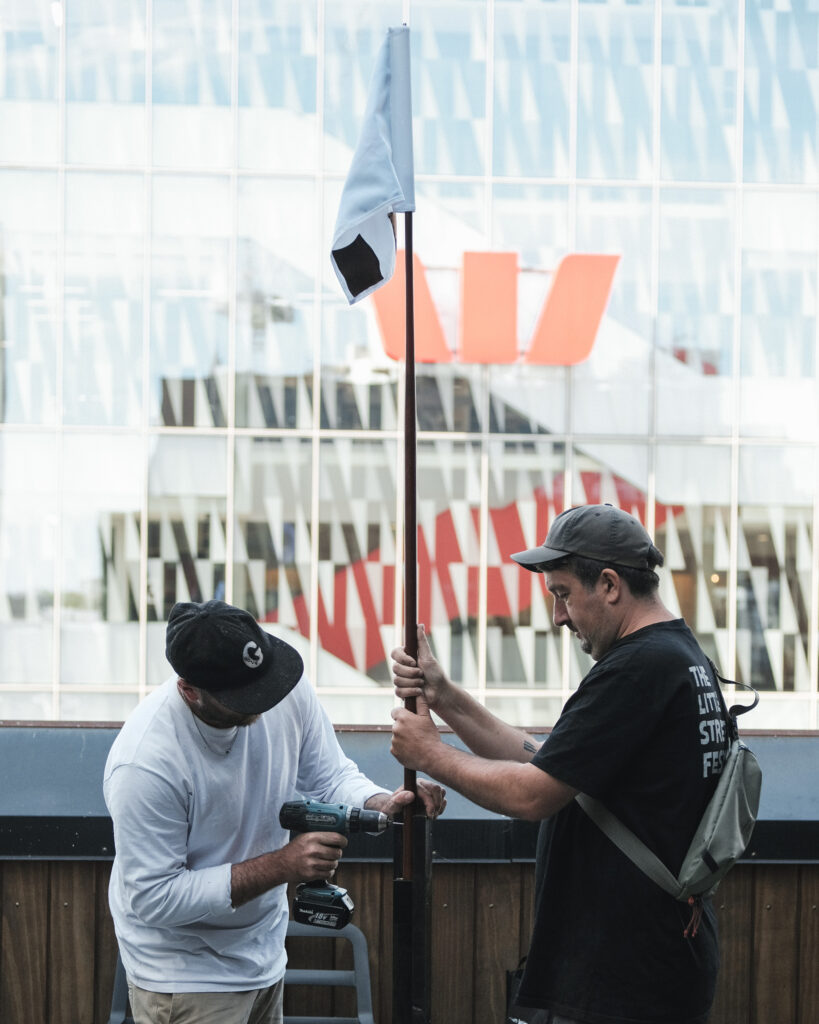
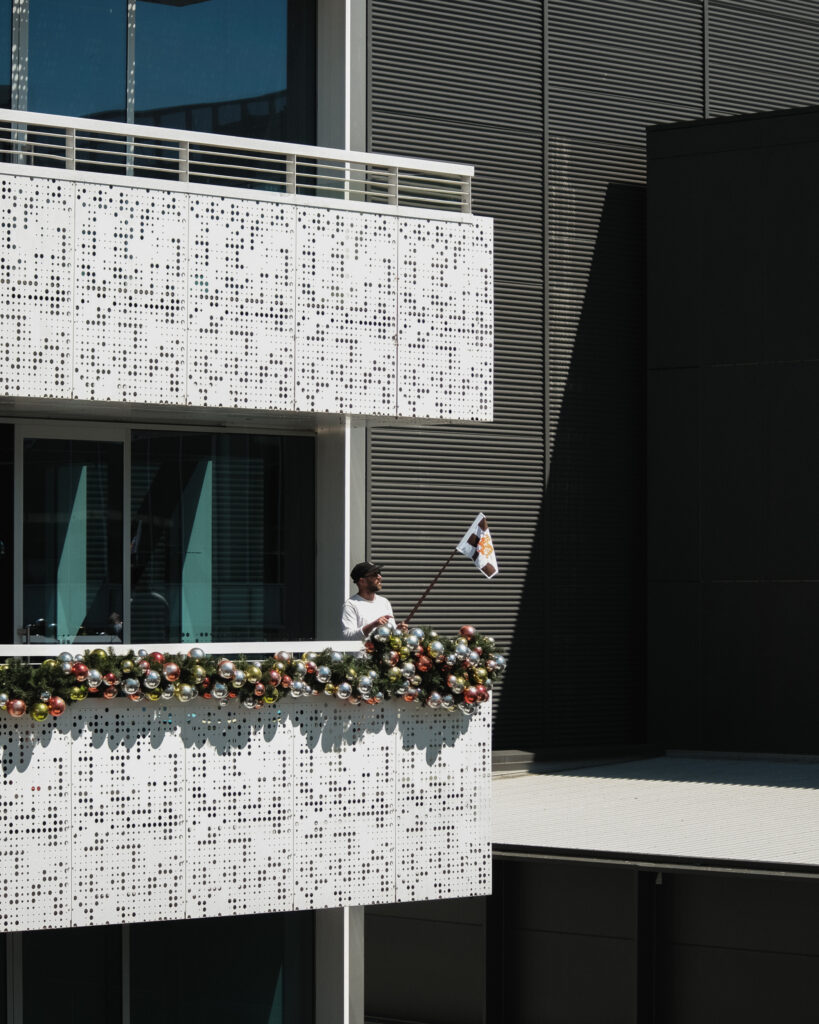
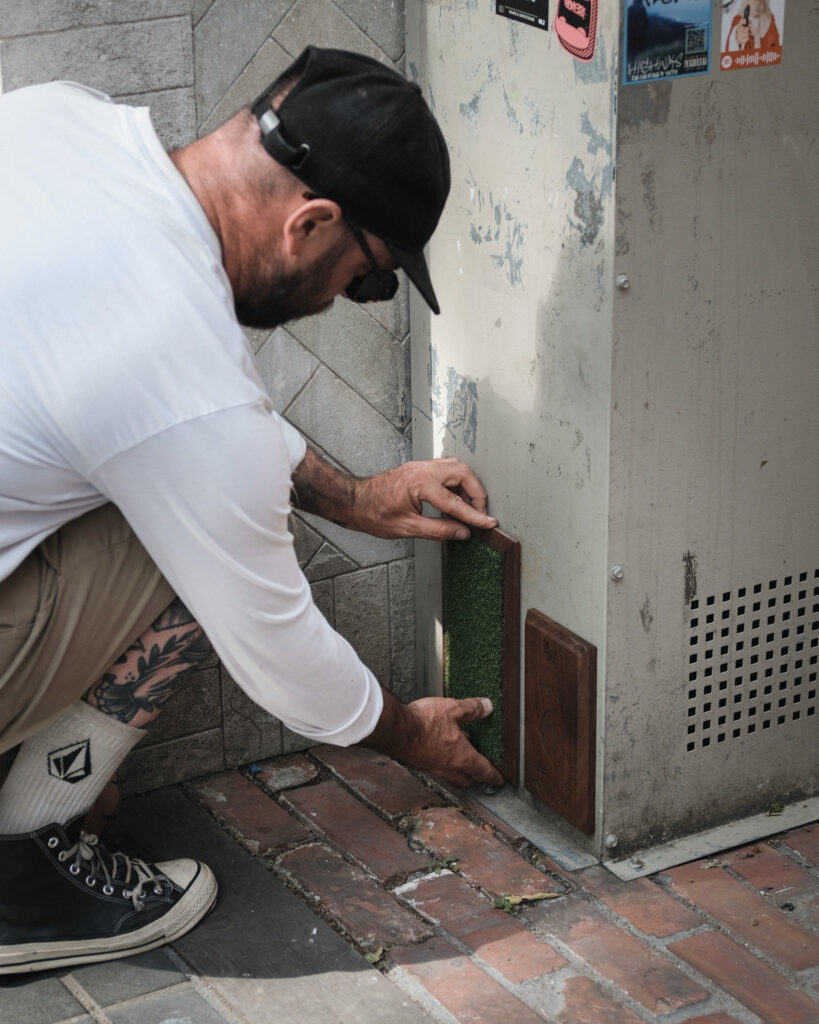
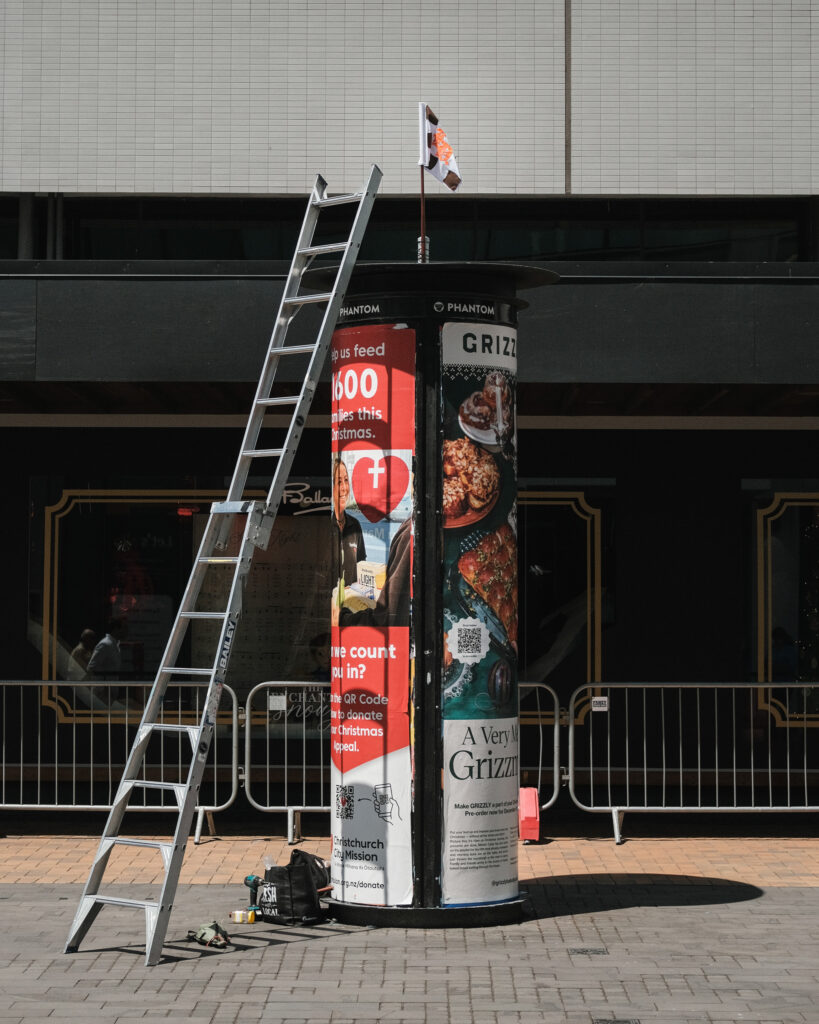
Josh Bradshaw / Low Draw Projects – Play It As It Lies: Josh Bradshaw has proven a creative chameleon over his career, re-emerging sporadically with new fixations that inform and nourish his creative impulses. But even within this constant reimagining, it was somewhat surprising when, under the Low Draw Projects banner, he turned his imagination to the golf course. Yet, as he explained, the fixation was built upon an earnest appreciation: “When I find something I like, I become completely obsessed with everything involved with and surrounding it: fashion, art, music, objects, lifestyle, history. I can’t help but fully commit to the subject of my interest, immersing myself in the culture and using it as means of self-expression.” Drawing from an “all-consuming obsession” with the gentleman’s game, Bradshaw set about making his own golf-related objects – reimagining the aesthetic of the game to reflect his own world – the styles of skateboarding, punk, hardcore and DIY culture overwrite the game’s traditional appearances. This act of recontextualisation was also central to the artist’s Play It As It Lies project – a nine hole course plotted throughout the city, inviting new ways of seeing both the urban landscape and the game of golf itself. Despite the accompanying video which showed the artist ‘playing’ the course (with boiler suited caddy in tow), Play It As It Lies was ultimately unplayable, the game one of imagination and exploration – the engraved tee green boxes and hand stitched flags (the handmade elements a central part of the project) placed in impossible locations – drawing inquiry and automatically reframing relationships to space and lines of sight. Rather than a clear fairway, the course was located across busy pedestrian malls, upper stories of buildings, heritage locations and more. But in laying the course across the cityscape, we were challenged to reimagine the act of the play – the rules and etiquette of the manicured golf course substituted for the bustle, diversity and potential of the city. The viewer was invited to consider the social and spatial dynamics of the city terrain – how would such a shot be navigated? What trajectory would be needed? What are the obstacles? What are the possibilities? A multifaceted project that spanned material elements, play, performance, documentation and exploration, Play It As It Lies was a perfect summation of the Little Street Art Festival’s ethos – the city as a site of layered meaning and possibility.
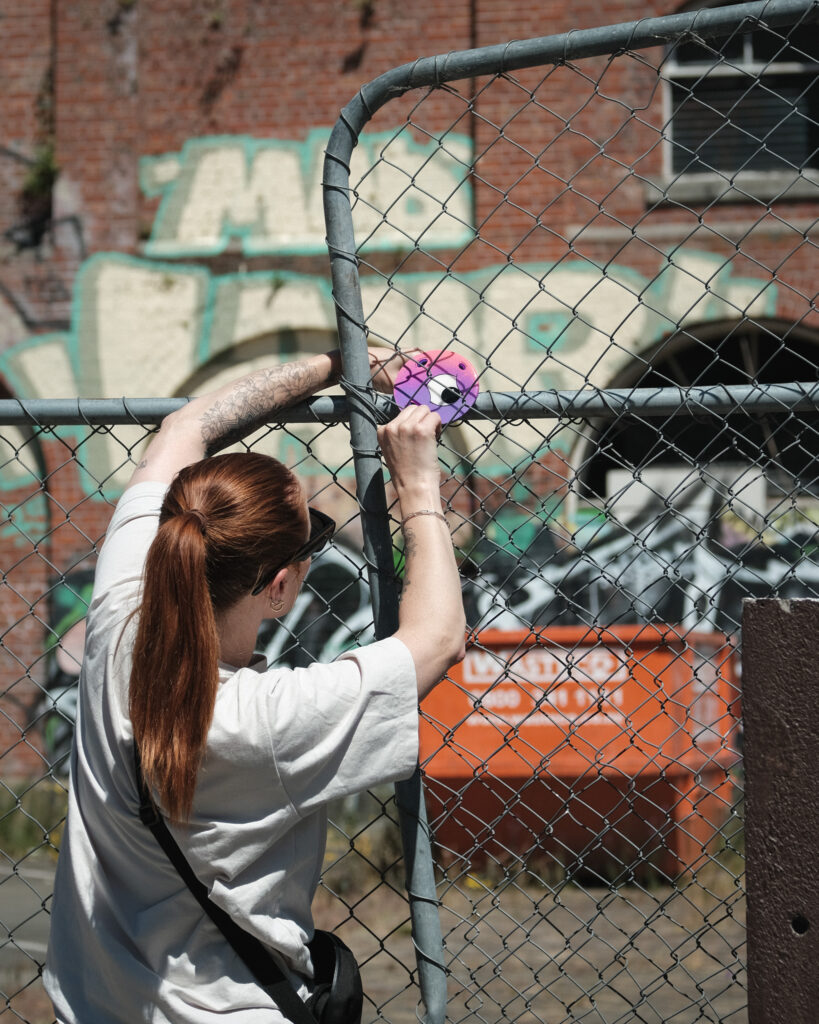
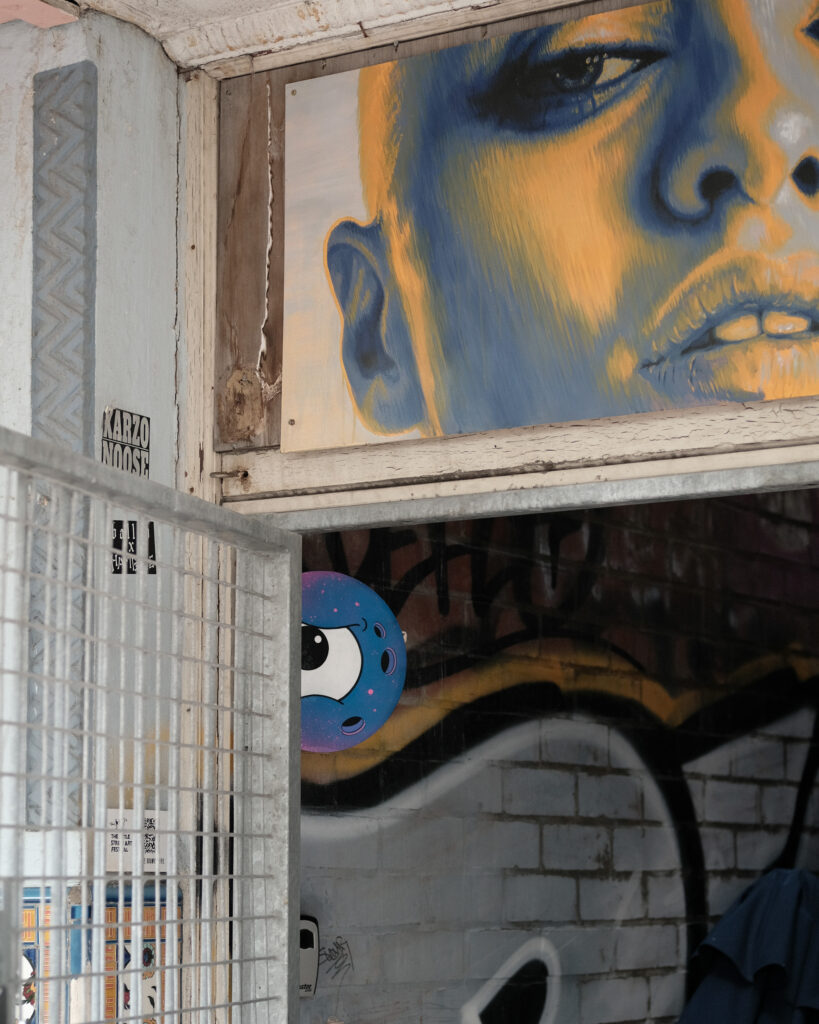
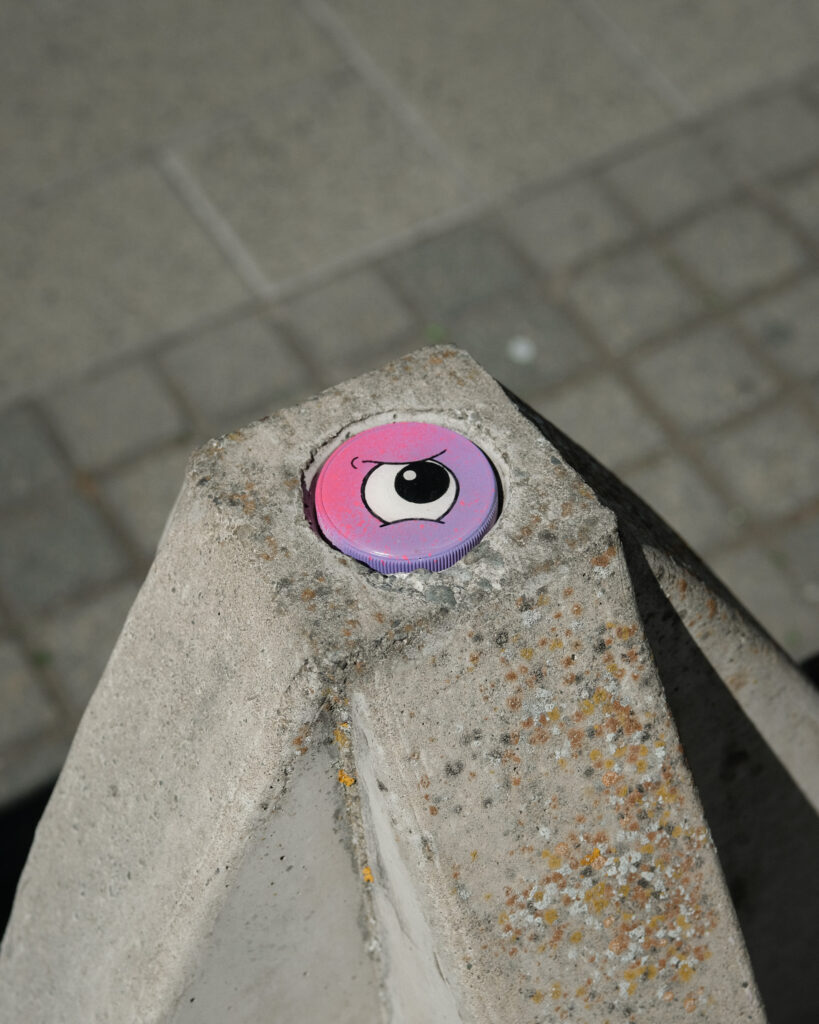
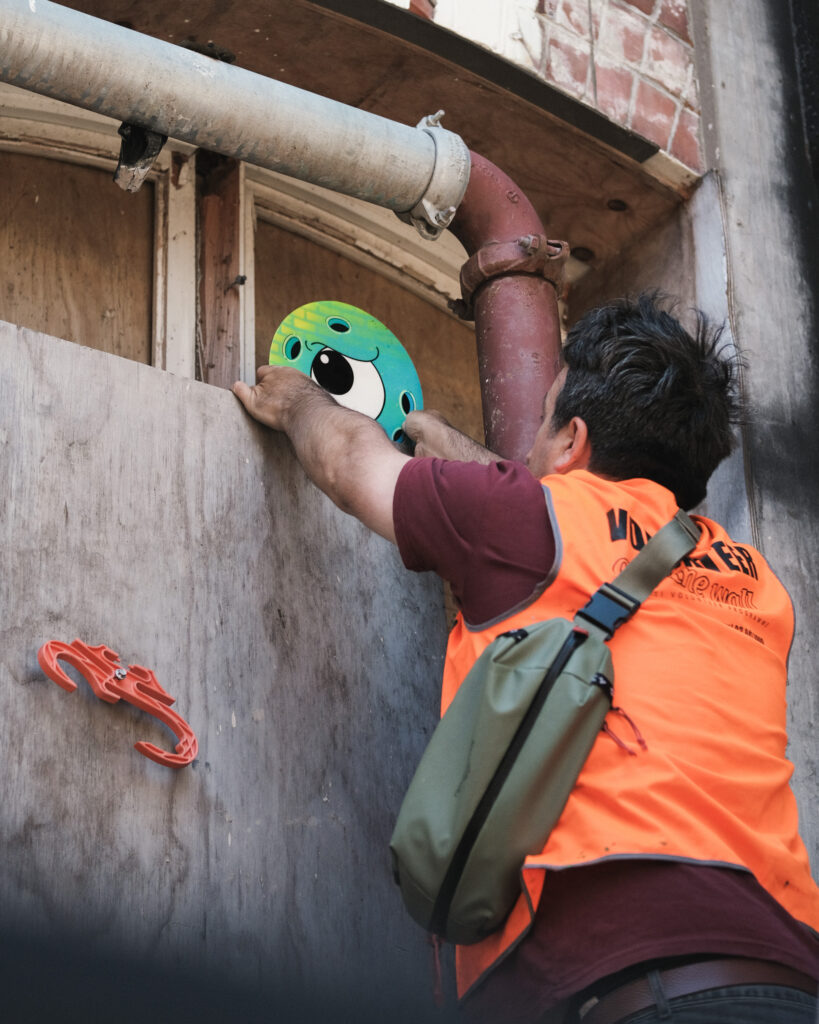
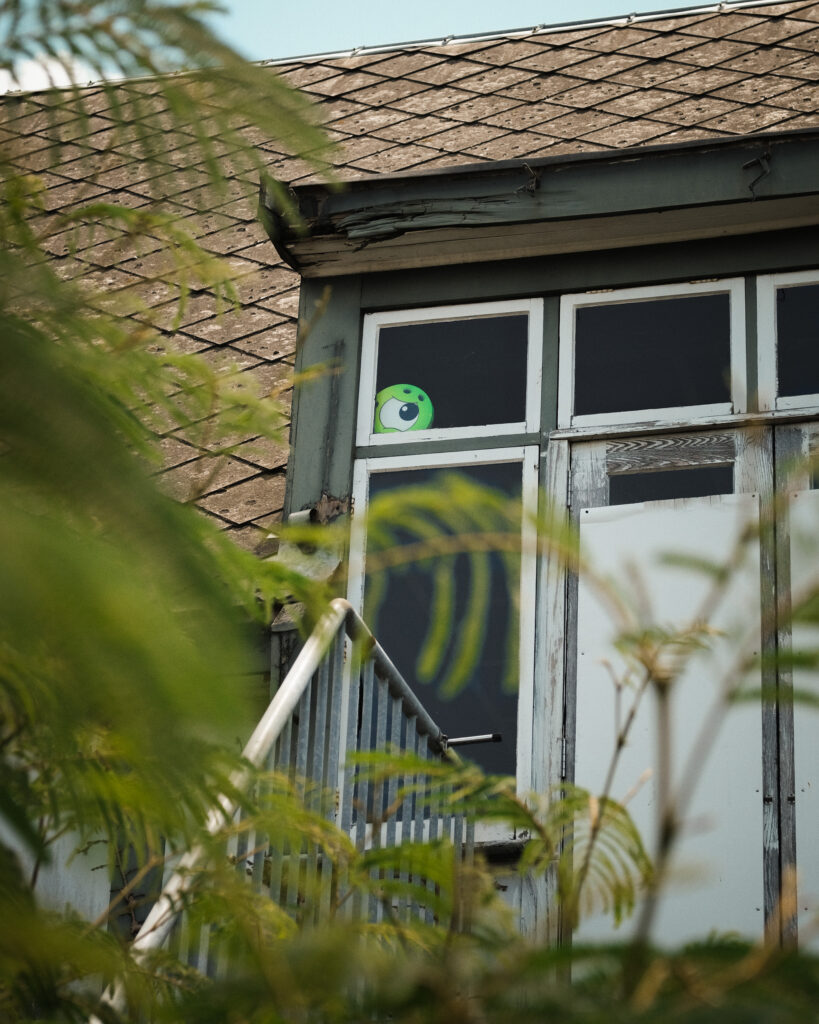
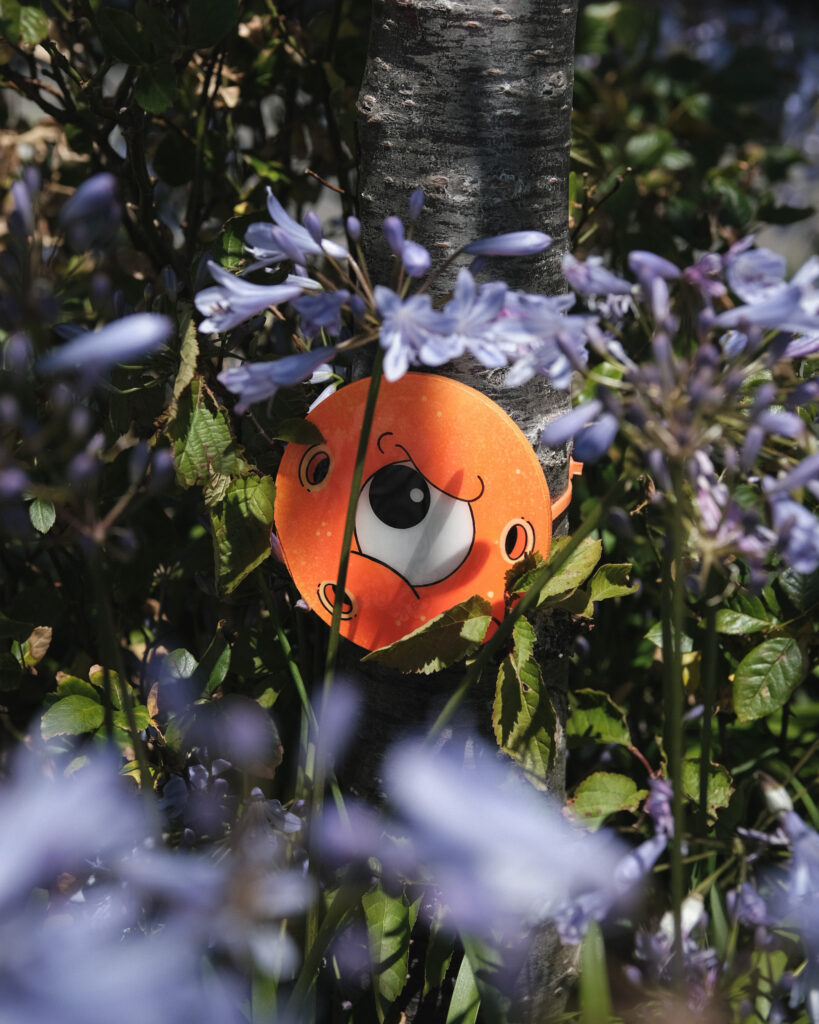
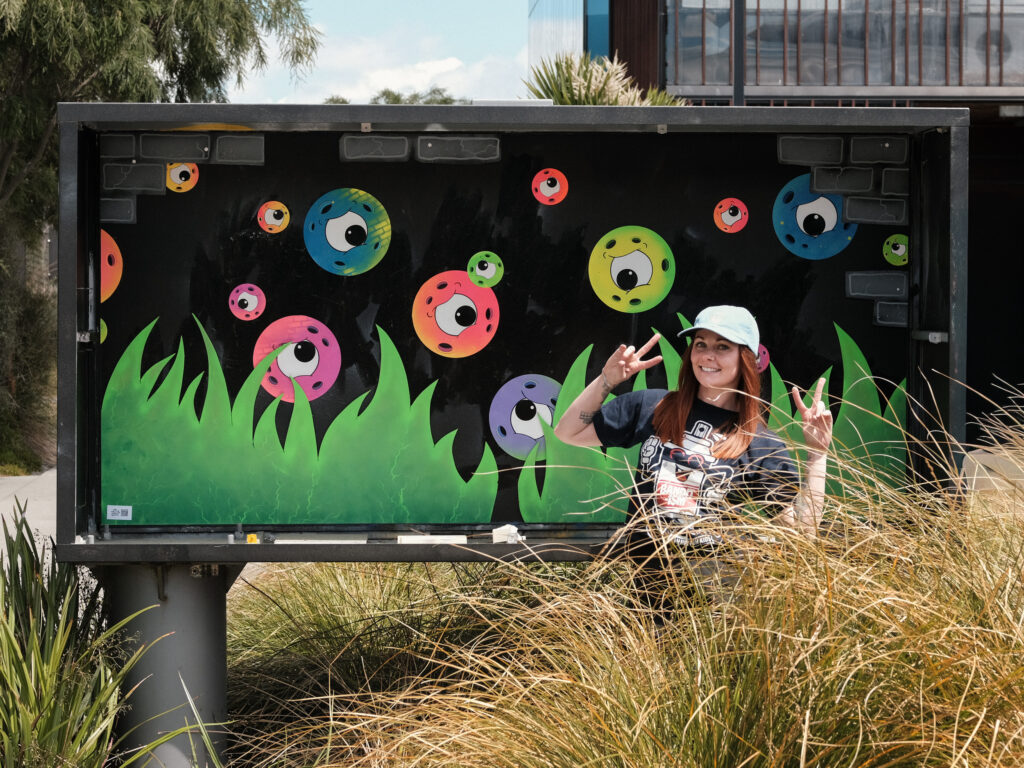
Gemma Rae – All Eyes on Me: In their colourful, graphic style, intense glares, evident attitude and pristine resin finish, Gemma Rae’s ‘monster planet’ characters are alluring and insistent. Until now, they had been largely contained within interior spaces, but this changed with the Little Street Art Festival, Gemma Rae’s creations let loose across the city, invading creatures nestled in unexpected locations, observing the city as if in preparation for a larger infestation. Her city-wide installation, All Eyes on Me (drawn from the iconic Tupac Shakur song- hip hop is a strong influence on Gemma’s work), was both a new platform for her work, and a subversion of the urban experience – the artist’s eye motif turned back on the unexpecting public. The stern gazes of varied sizes were contrasted with flashes of bright, neon colour-ways and that perfectly glossy finish, the combination enabling the pieces to be both subtle and overt within the urban landscape. Gemma’s work as a body artist adds another layer to consider – the organic surface of the body echoed in the use of obscure and surprising urban locations of All Eyes on Me – both imperfect terrains utilised as unconventional canvasses. The infestation of All Eyes on Me emerged from the light box Manchester Street (a recurring site for the Little Street Art Festival), a menage of character jostling for space within the boxed framework. From here, the planets spread throughout the city, not following specific paths, but making use of incidental spaces and fixtures. Finding potential in small details, from imperfect circular holes cut into rusted metal protrusions, the flat top of spider-like grate covers, missing brick work or holes in the ground, Gemma’s creatures made homes in the places we overlook, celebrating the possibility that can found by looking more closely – for both the artist and the audience. The discreet locations also added a sense of agency to the eyes – they watched us, noting our behaviour, our performances, our trajectories. We became observed subjects. If the bright colours suggested friend, the stern gazes suggested foe – where we sat in the eyes of these creatures was unclear. Had we upset them? Were they vigilant guardians? Were they preparing a plan? Conducting an experiment? Maybe it is a fine line between colourful whimsy and invasive threat…
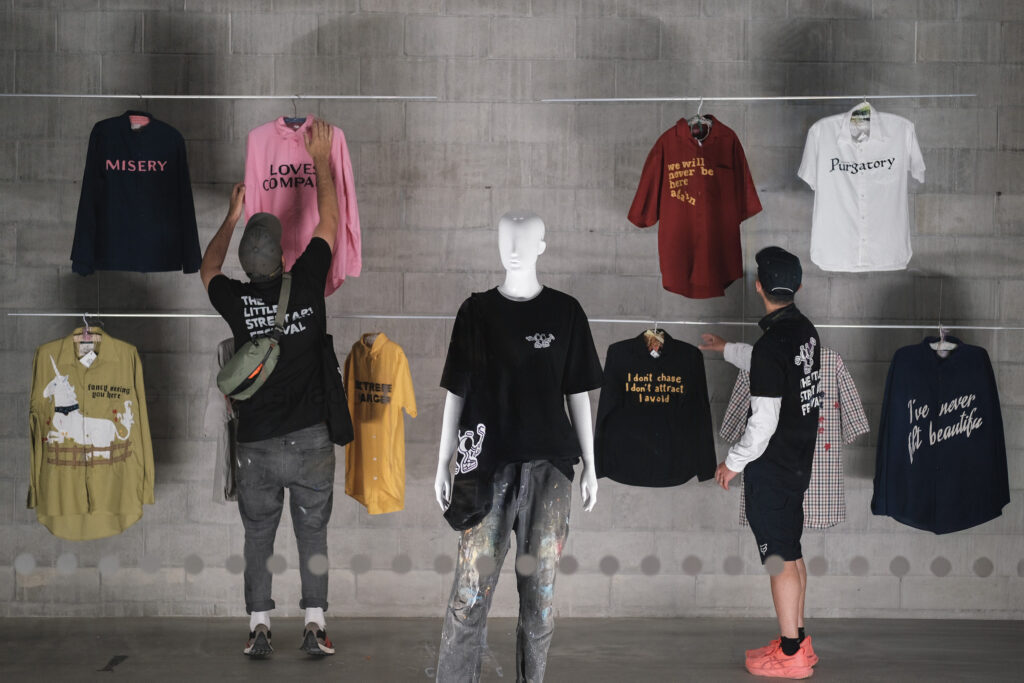
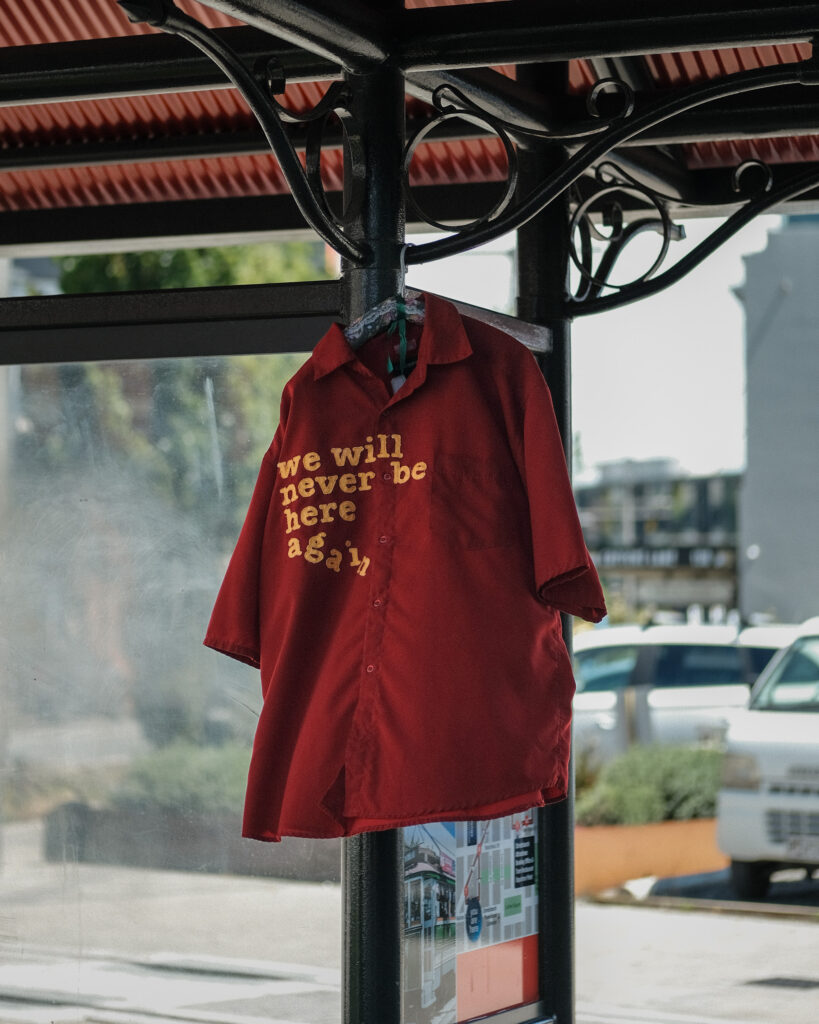
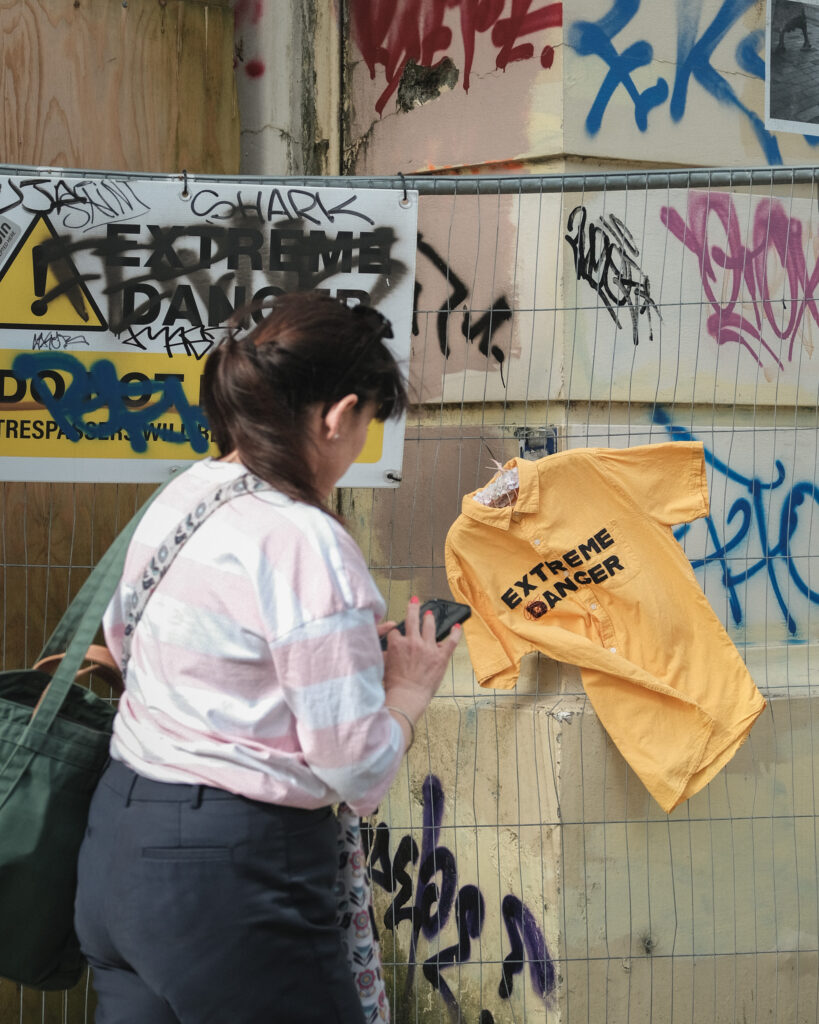
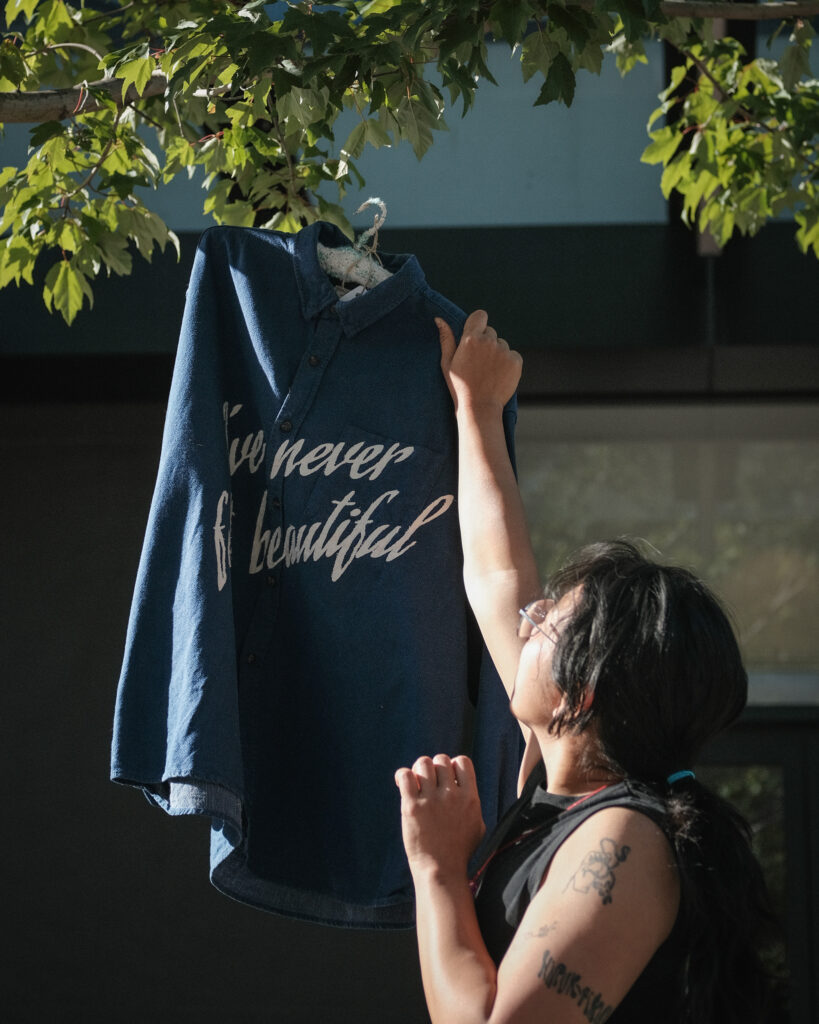
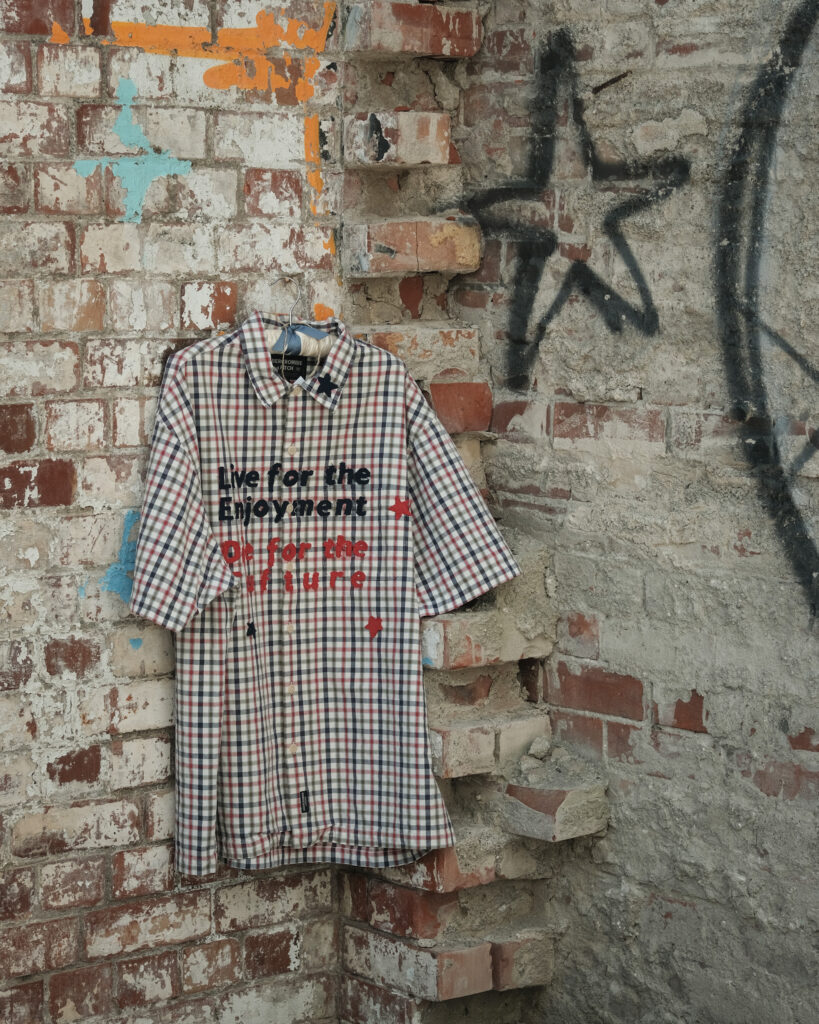
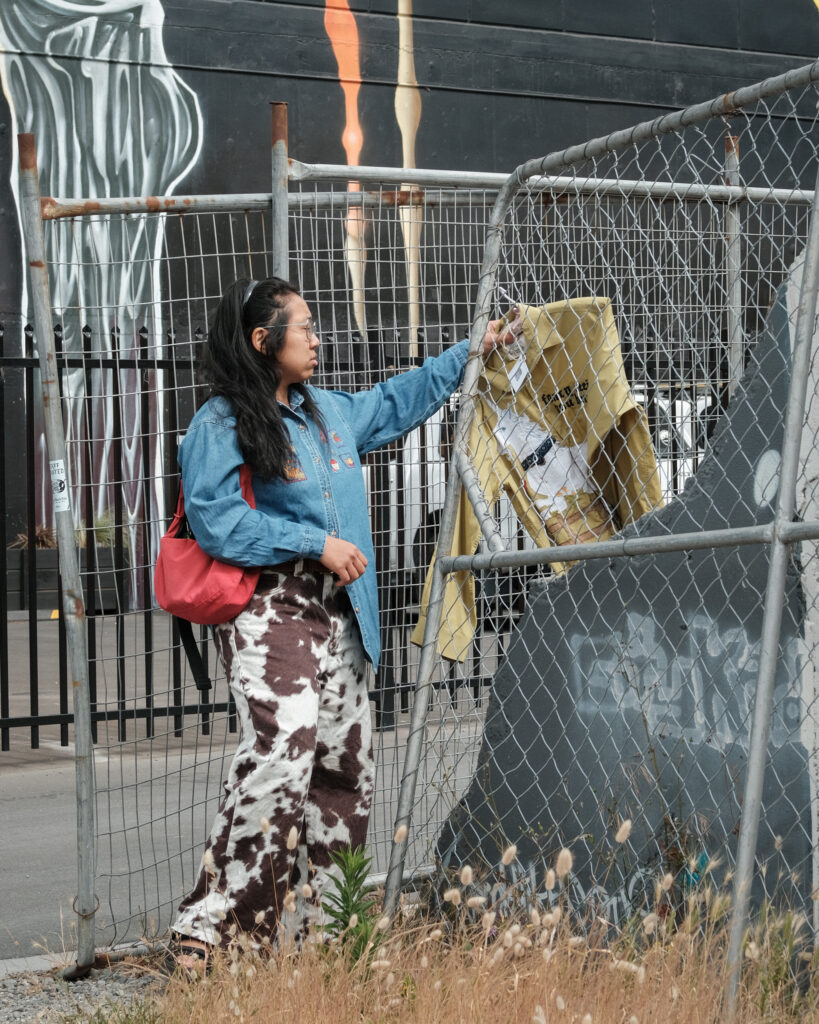
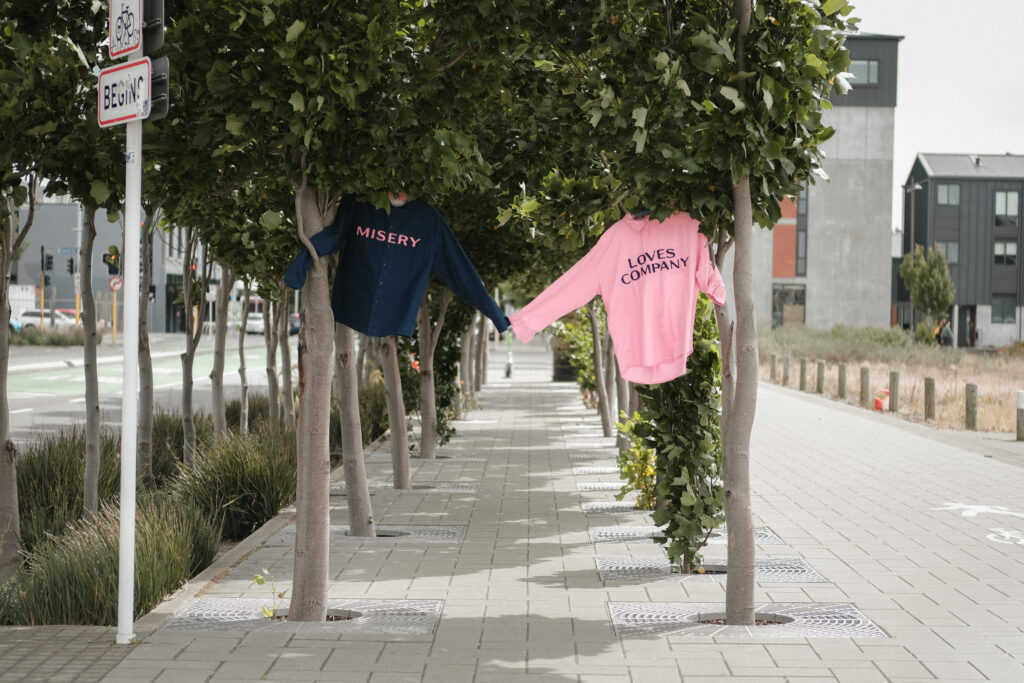
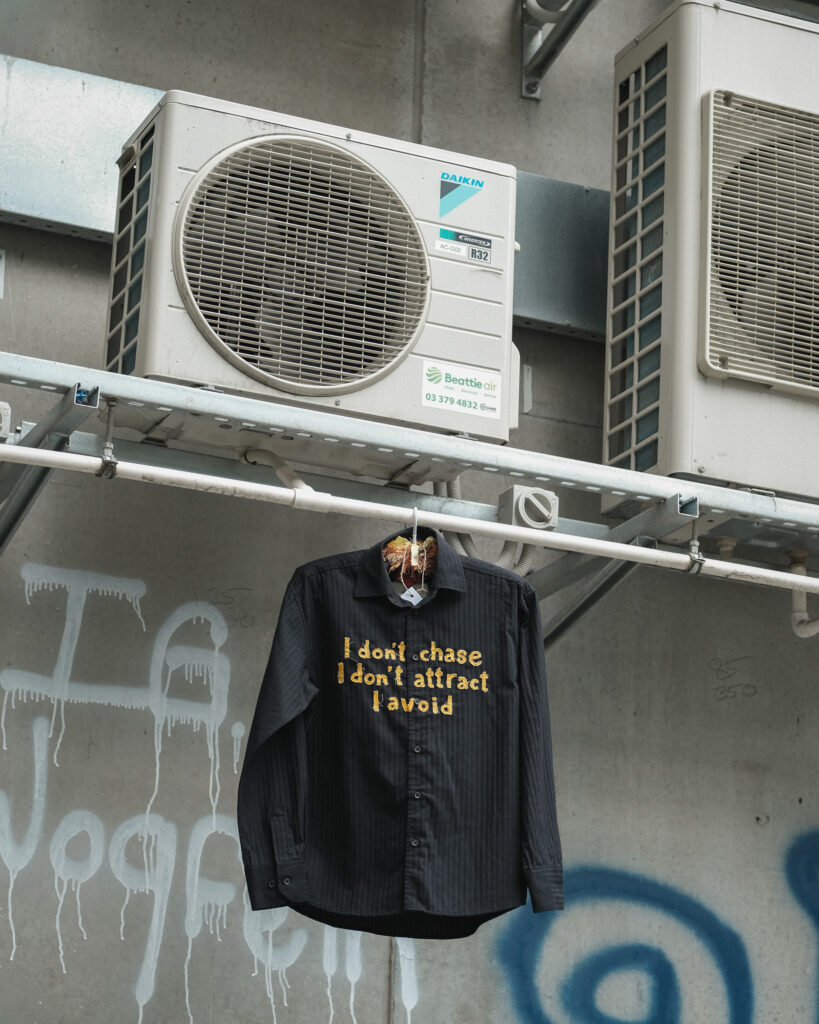
Iva Anjani – Retail Therapy: Located in an empty shop within the BNZ Centre, Iva Anjani’s Retail Therapy presented an antithesis to commercial consumerism (and specifically mass-produced fast fashion): a store that was never open, displaying a collection of hand altered, up-cycled garments slowly disappearing into the cityscape, free to collect for those quick enough to find them. Working under the moniker Rough Patch, Anjani is an Ōtautahi-based creative born and raised in Jakarta. Primarily exploring textiles and repurposing materials, Anjani creates works that operate as both earnest and thoughtful personal reflections and more broadly concerned commentaries. For Retail Therapy, Anjani created both a collection of unique art objects, and an installation that spread across sites, shifting from an inaccessible shop front to a participatory treasure hunt where finders were keepers. Anjani’s ten upcycled shirts, each hand-stitched with a pithy poetic musing – recognition of the sloganeering role clothing and fashion play in contemporary society – were hung either side of a festival dressed mannequin (resplendent in paint splattered jeans) in a vacant retail space in the BNZ centre, a spotlight illuminating both the garments and the otherwise barren concrete space. In front of the display, small signs indicated the price: FREE. However, the doors to the space were locked, there was no sales assistant, there were no listed opening hours. The items might have been free, but there was apparently no way to acquire them. The trick was found in the sign displaying a QR code – linking to the festival Instagram account, where each day, one of the items was dispersed into the city, free for the first person who could locate its whereabouts. This approach was both a rebuttal of convenient, typical commercial consumption, but also an invitation into the cityscape, the experience and awareness of the urban landscape inherently part of the project. Anjani’s pieces were not just part of a subversion of retail, they also served to reconsider the utility of art works – whoever secured one of the shirts was also presented with the option of whether it should be displayed like a painting or worn like clothing. In what ways are we invited to consume and engage with art? As with all street art, Anjani’s works also took on a separate life once in the wild – re-contextualised by the surrounding environment and disconnected from the shop front for any passersby unaware of the festival. This also provided new readings for the shirts’ slogans – ‘Where is the undo button?’, ‘I don’t chase, I don’t attract, I avoid’, ‘I’ve never felt beautiful’ and the pairing that declared ‘MISERY’ ‘LOVES COMPANY’ on alternate pink and blue shirts – reframed in public space like invisible bodies moving through the city.
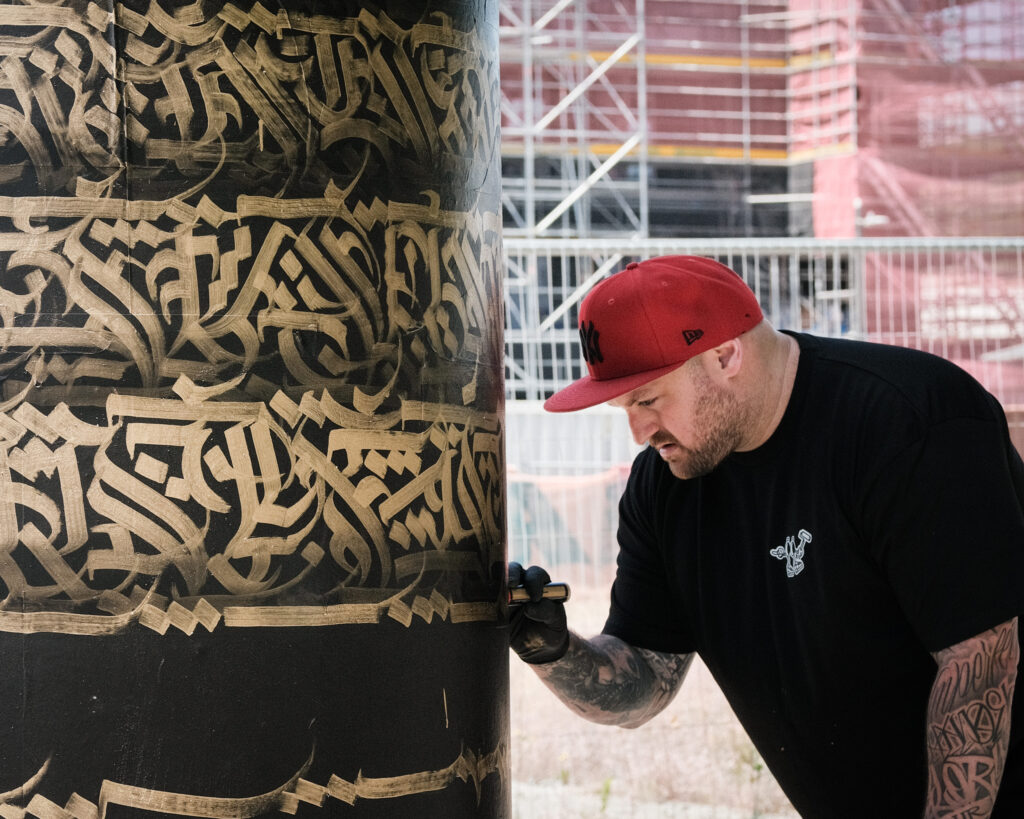
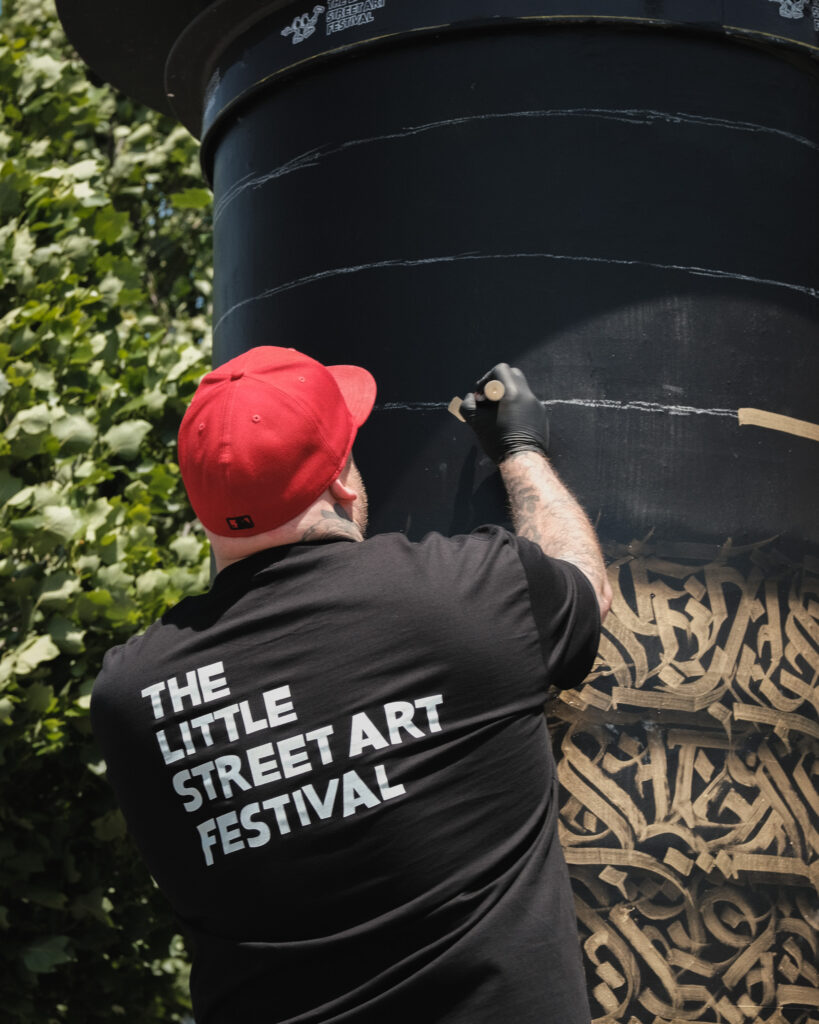
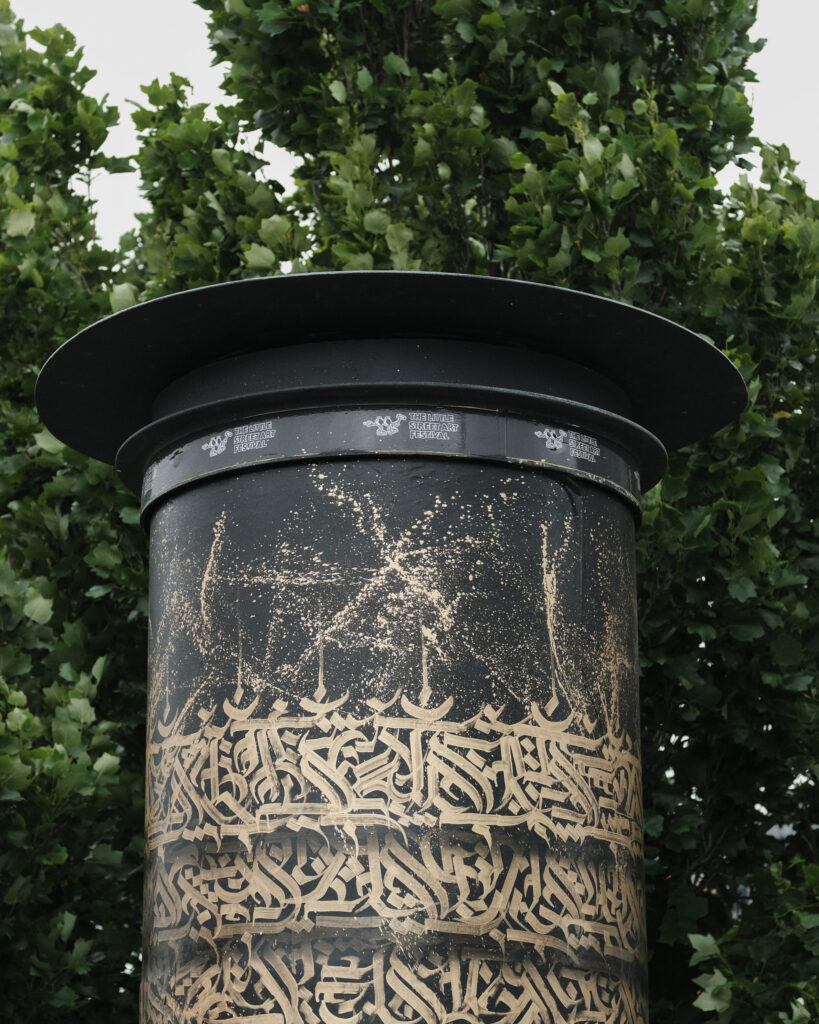
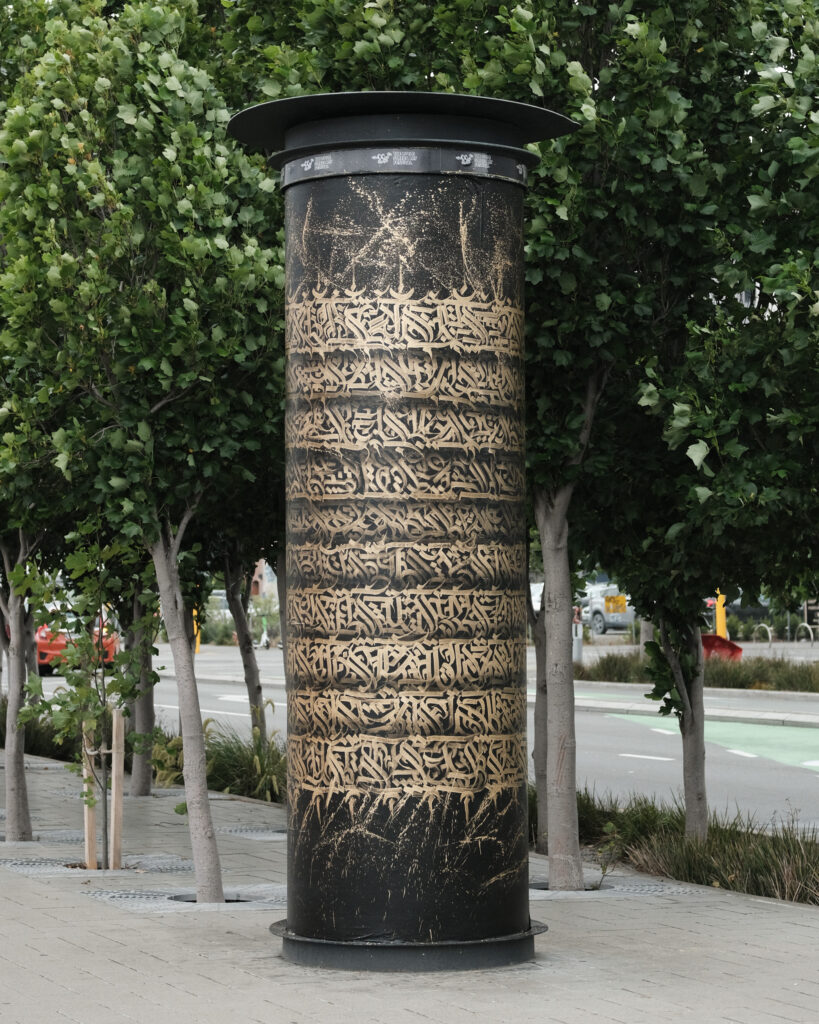
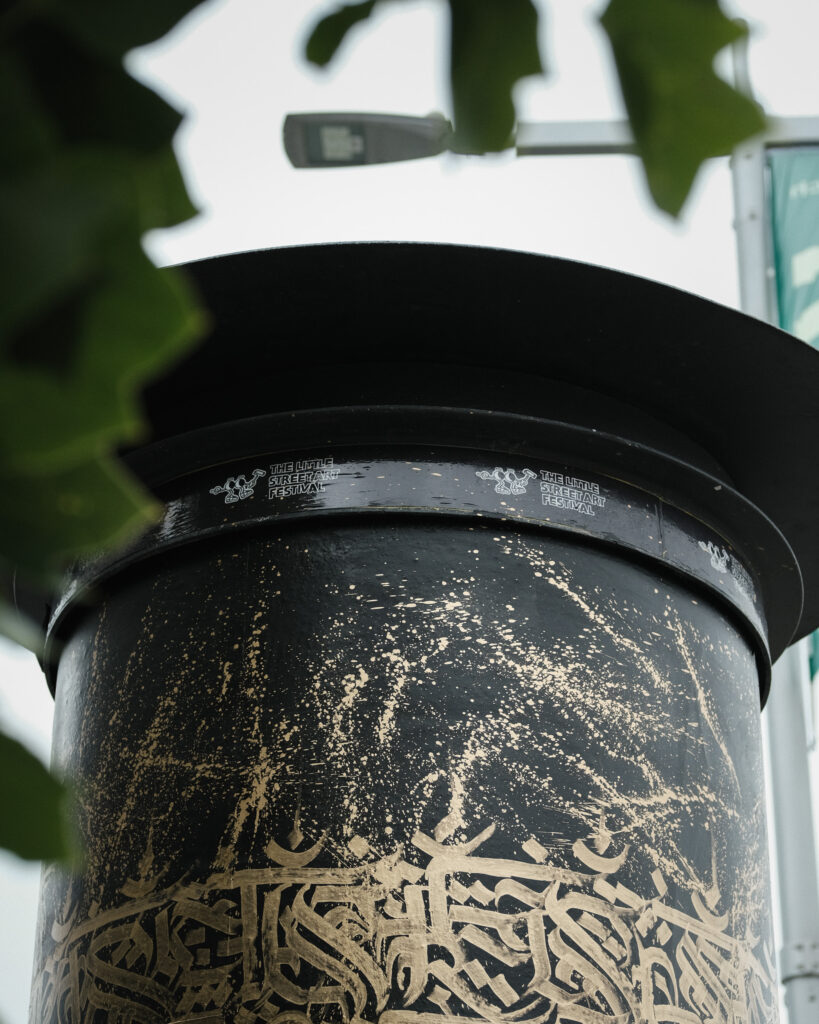
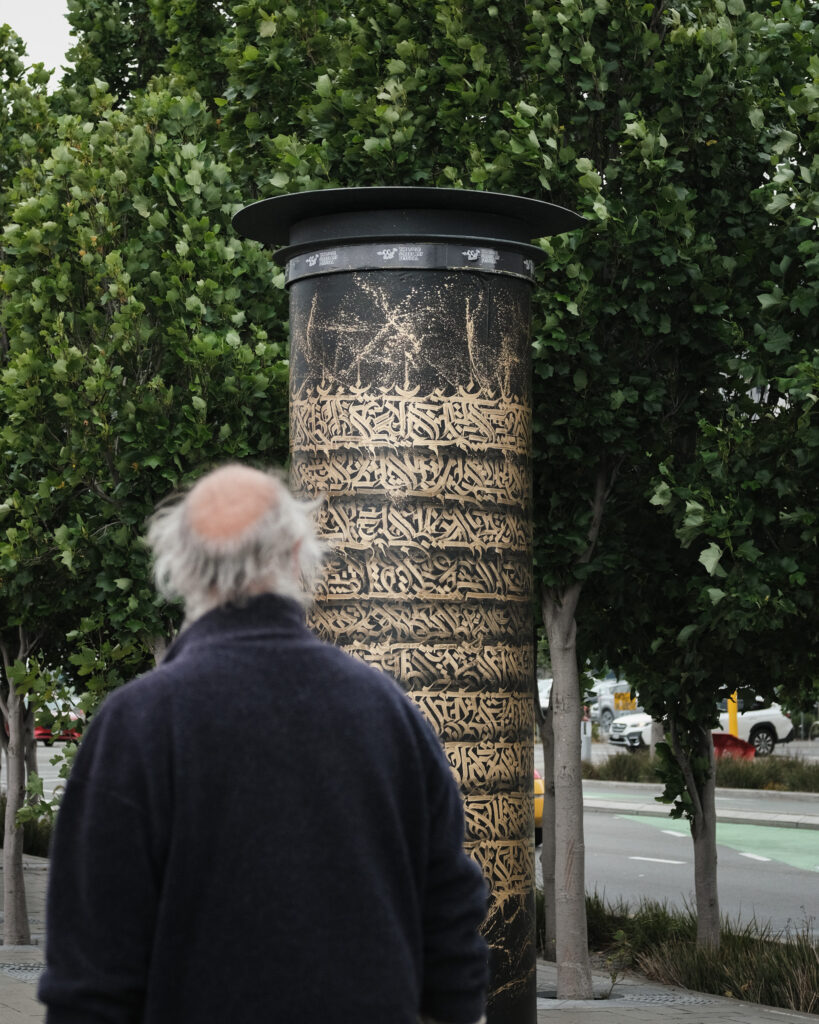
Ekos – Ductus: For several years now, Watch This Space has worked alongside poster legends Phantom Billstickers to creatively activate the circular bollard on Manchester Street. The collaboration began with The Paste-Up Project, a series of paste-up artist takeovers of the bollard, exploring the connections between bill-postering and the possibilities of paper-pasted art, and has extended to social projects like an installation with artists who have experienced homelessness to mark World Homeless Day in 2025 (a partnership with Housing First, The White Room, the Christchurch Methodist Mission, and The Christchurch City Mission). Since the event’s beginning, the bollard has also been a recurring site for Little Street Art Festival artists – Kophie Su’a-Hulsbosch in 2023 and Sofiya Romanenko in 2024. In 2025, the rotund pillar was handed over to Ekos, whose graffiti and tattooing background made for a perfect synthesis in Ductus. With a deep-rooted interest in typographic expression, whether on walls, canvas, or flesh, Ekos’s production served to explore the formal visual impact of letter-forms, to create a performative activation, to ask questions around our response to public communication and to subvert our expectations of written text – all in a striking production of gold script sweeping and snaking around the black totem. The titular term Ductus refers to the specific order and direction of strokes used to form a letter in gothic calligraphy – a suggestion of the process the artist followed as he constructed his composition – concerned more with the holistic visual effect than legibility. Having already developed a refined approach to layering calligraphic forms into spatial illusions, Ductus provided Ekos with the opportunity to work publicly, at scale, and with the added challenge of a 360-degree canvas.
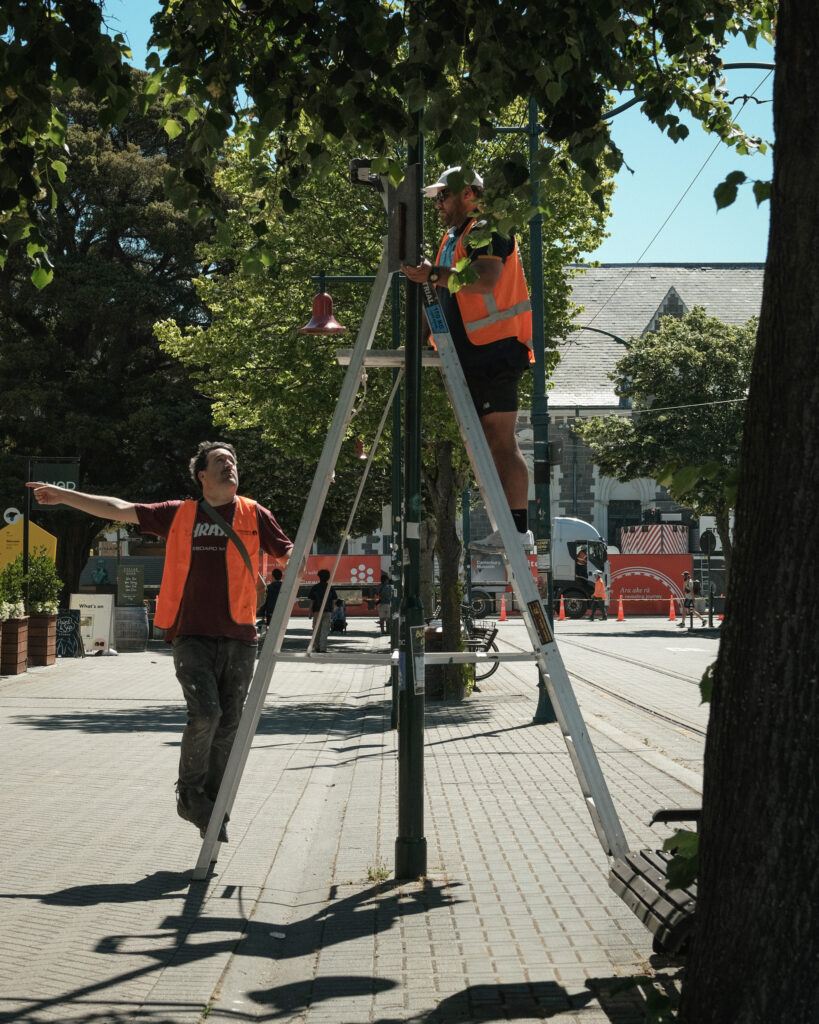
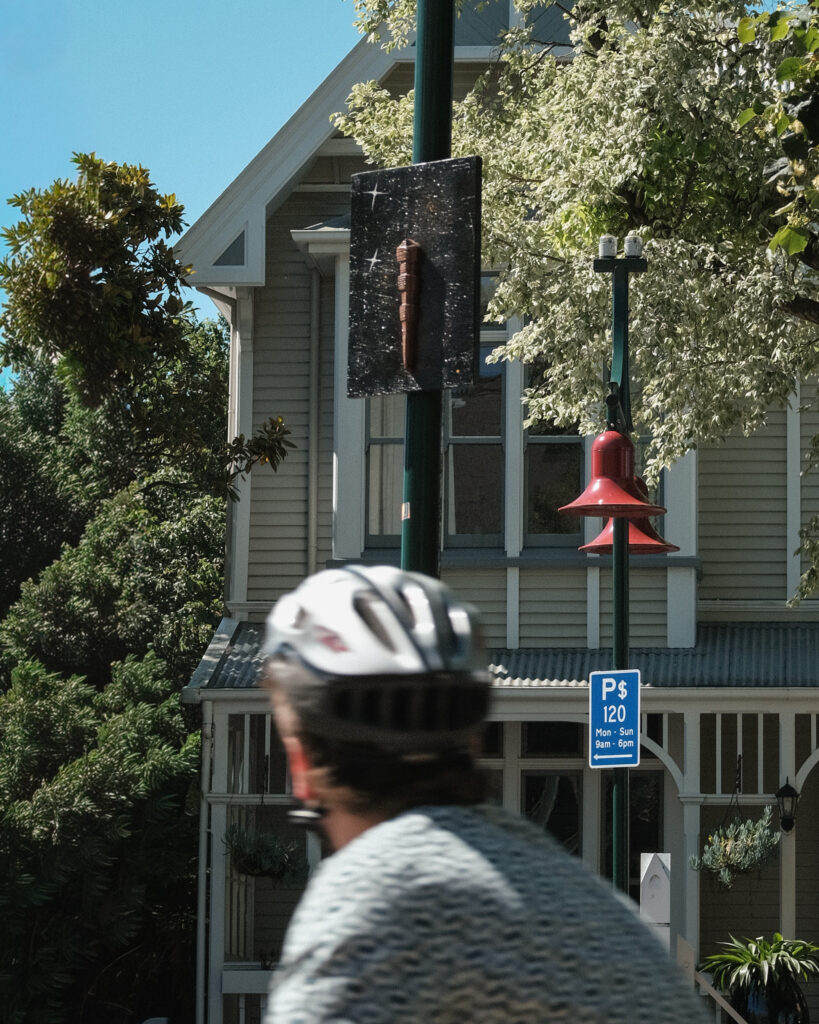
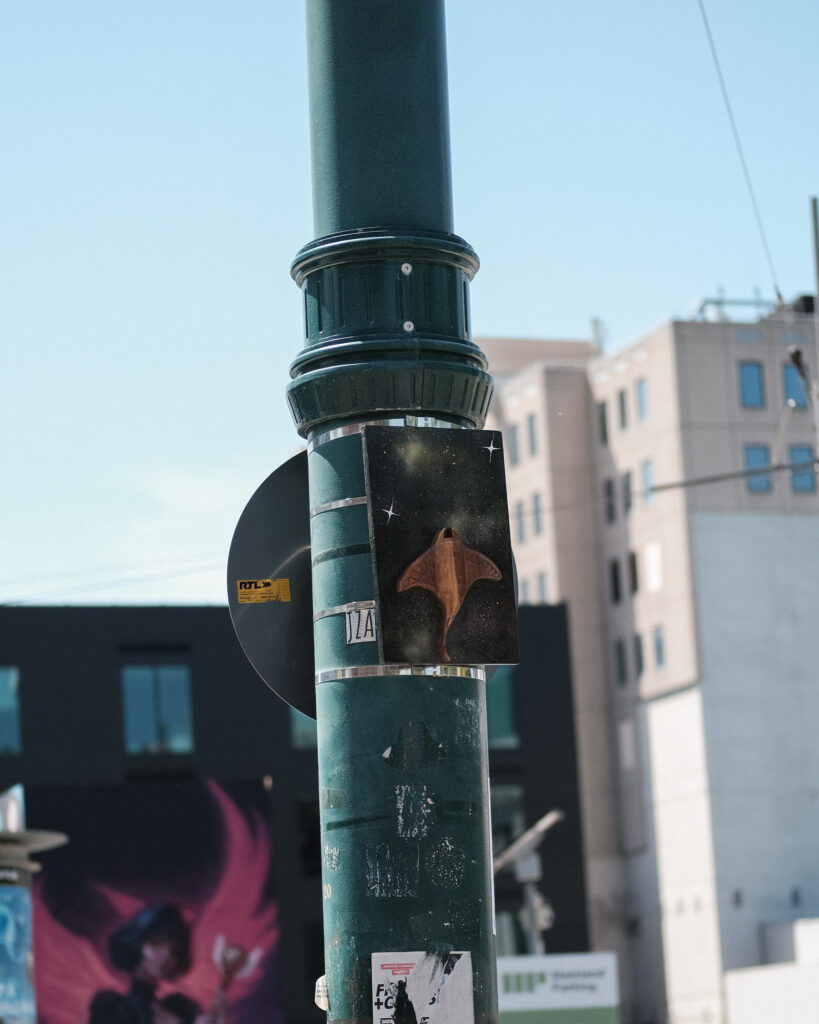
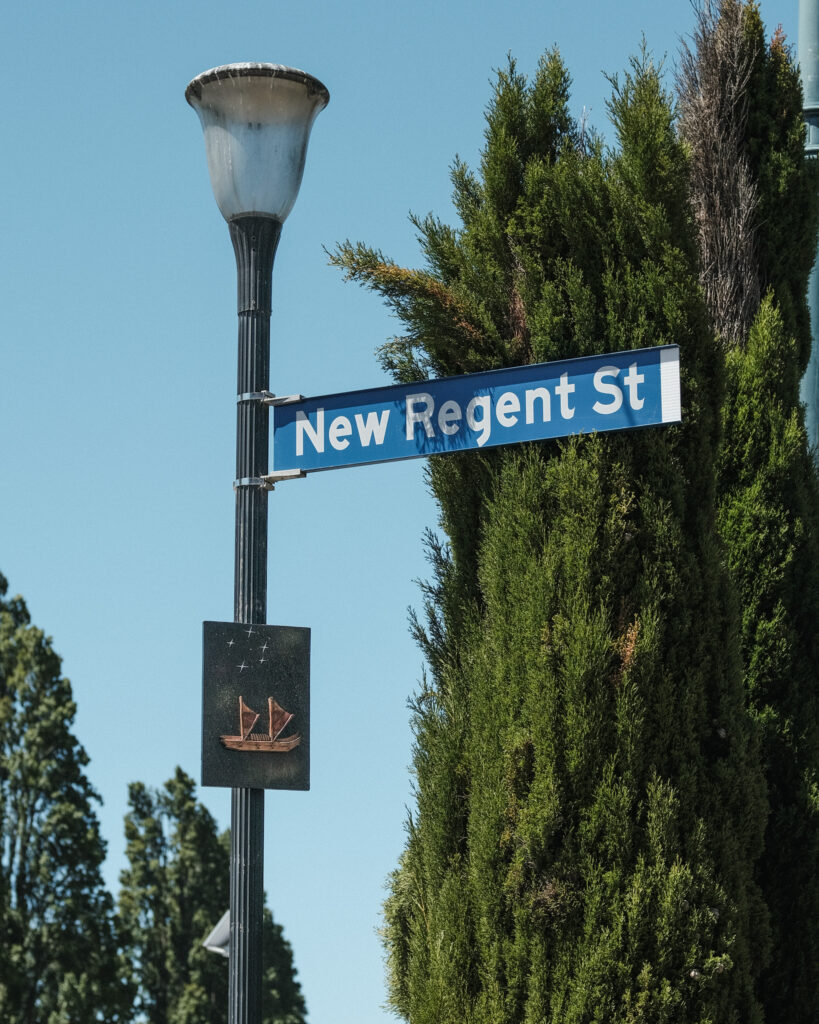
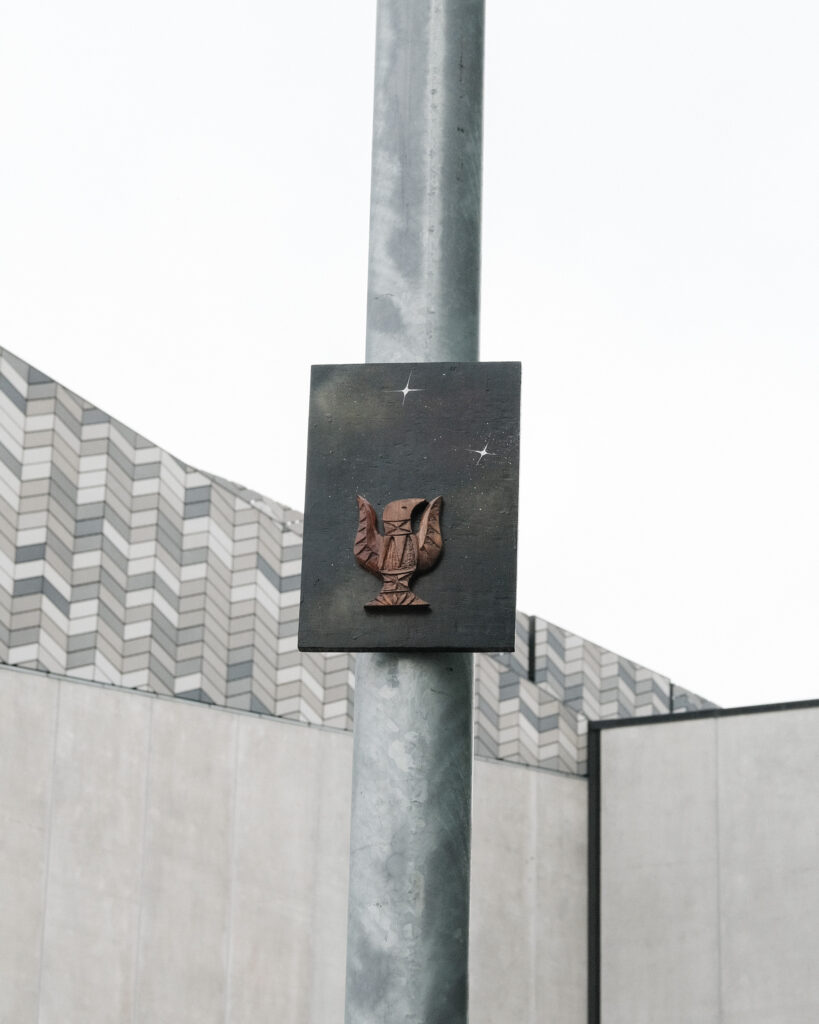
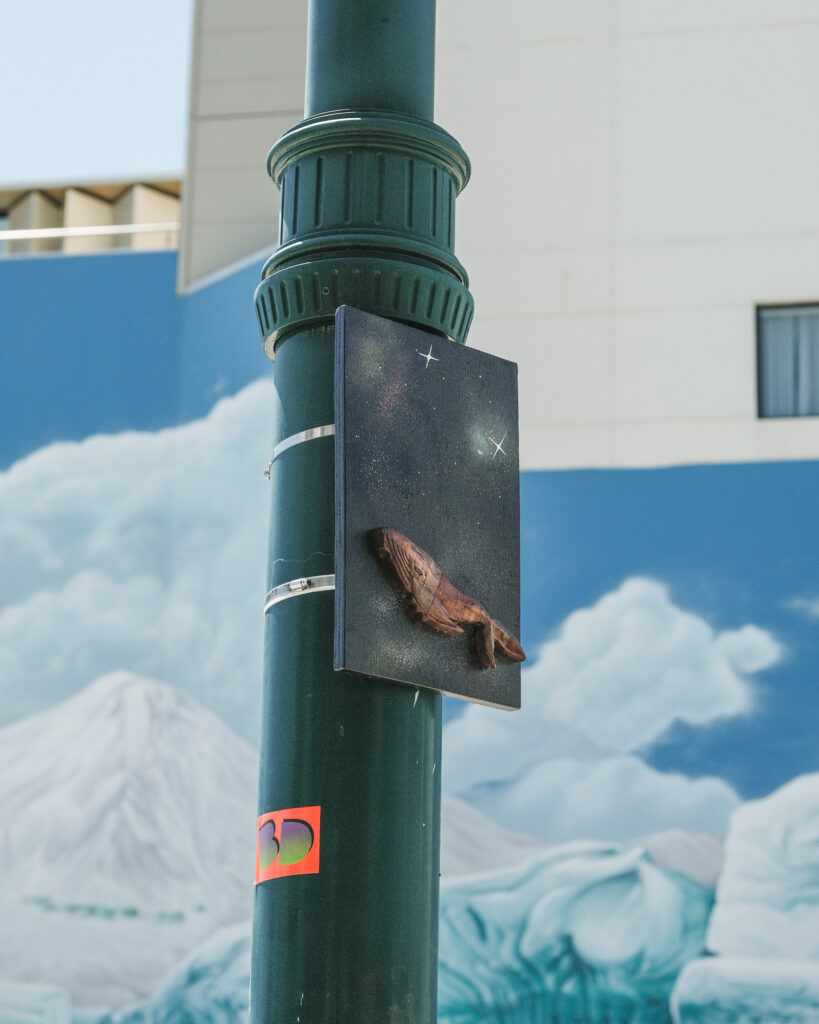
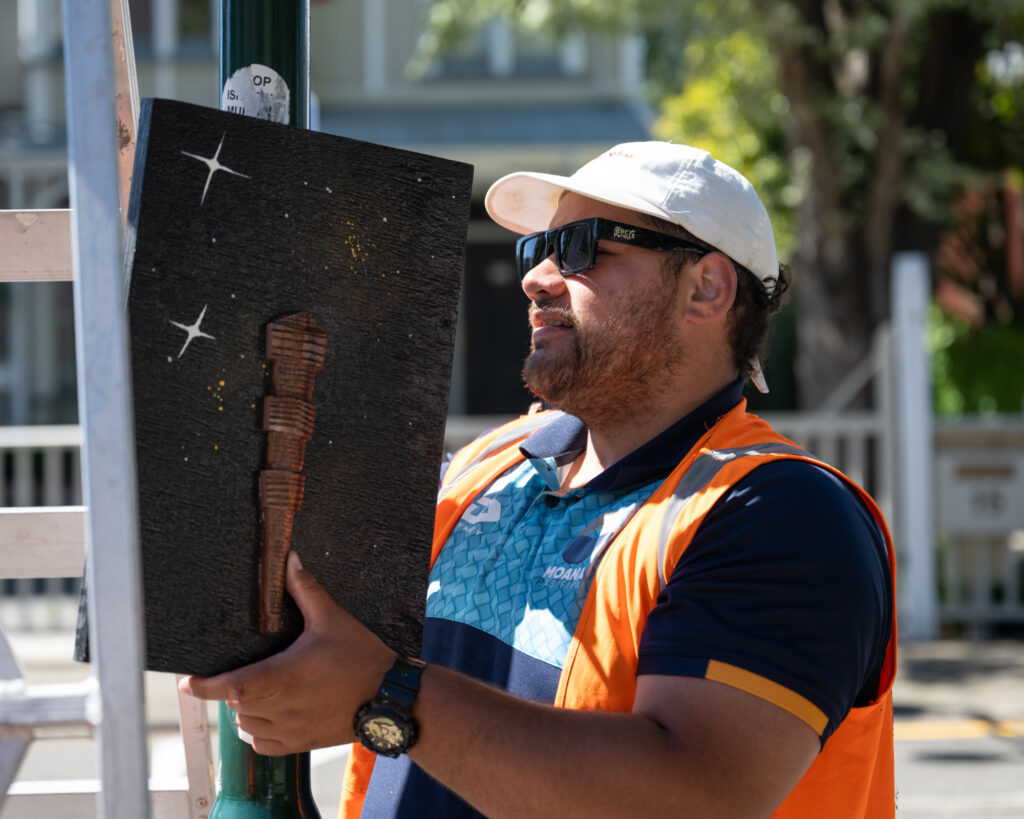
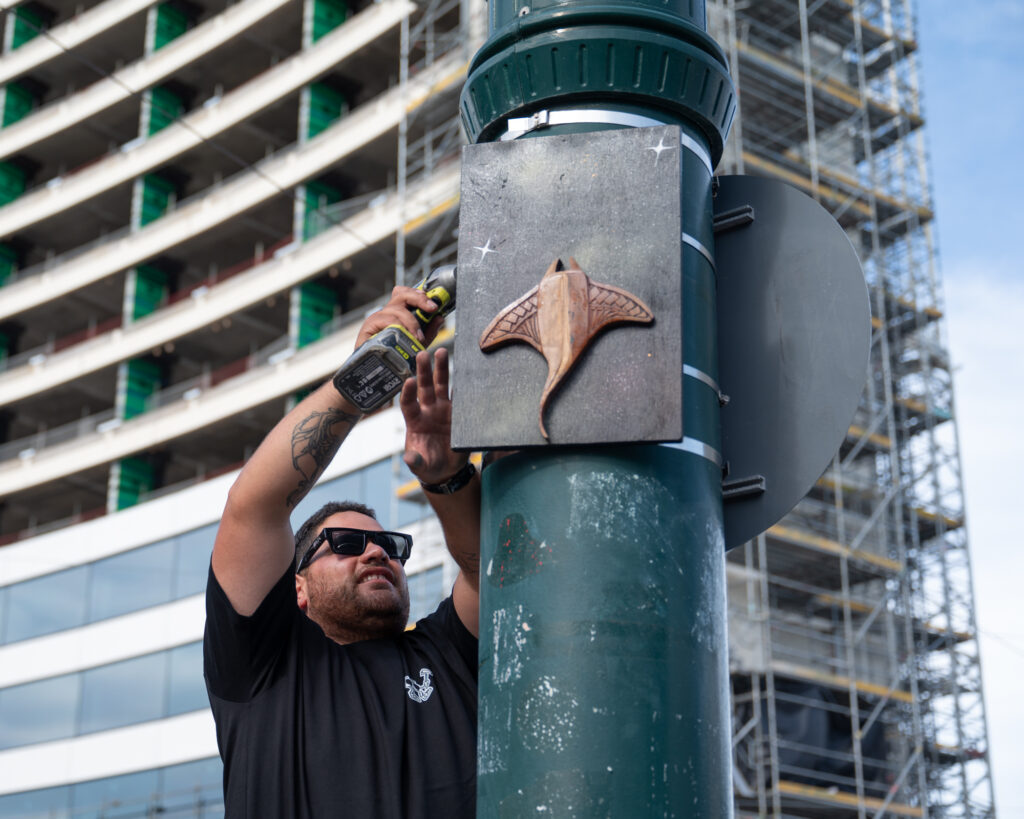
Monti – Folau: Drawing on his Tongan heritage, Monti’s Folau presented a selection of icons that speak of navigation and exploration (‘folau’ translates linguistically to ‘a voyage by sea’ in Tongan): tuna, rays, birds, waka and more – each beautifully carved and installed across the cityscape – drawing the audience’s gaze upwards, not only to the sky (and as such, the winds and the stars used in navigation), but also to a juxtaposition of the city’s colonial and post-quake physical profile with signs of the wider Pacific. Each icon was carefully chosen: the waka for it’s profound historical, cultural, and spiritual significance as the foundation of Tongan society, navigation, and identity, the war club (‘akau or pōvai) as a cultural artifact that symbolized status, spiritual power (mana), ancestral connections, and male identity, the eel in reference to the legend of Sina and the Eel (Sina ma le Tuna in Samoan), the origin myth that explains the creation of the first coconut palm, and the humpback whale, which migrates annually from Antarctic feeding grounds to Vava’u’s warm, sheltered waters (the artist is from VaVau), regarded as sacred guardians (koholā in related Polynesian languages) of the ocean and messengers from the gods, symbolizing protection and guidance. While their presence may be quiet and subtle, Monti’s pieces are undeniably powerful and filled with symbolic meaning, providing an intimate invitation to look beyond our immediate surroundings and acknowledge wider histories of the Pacific.
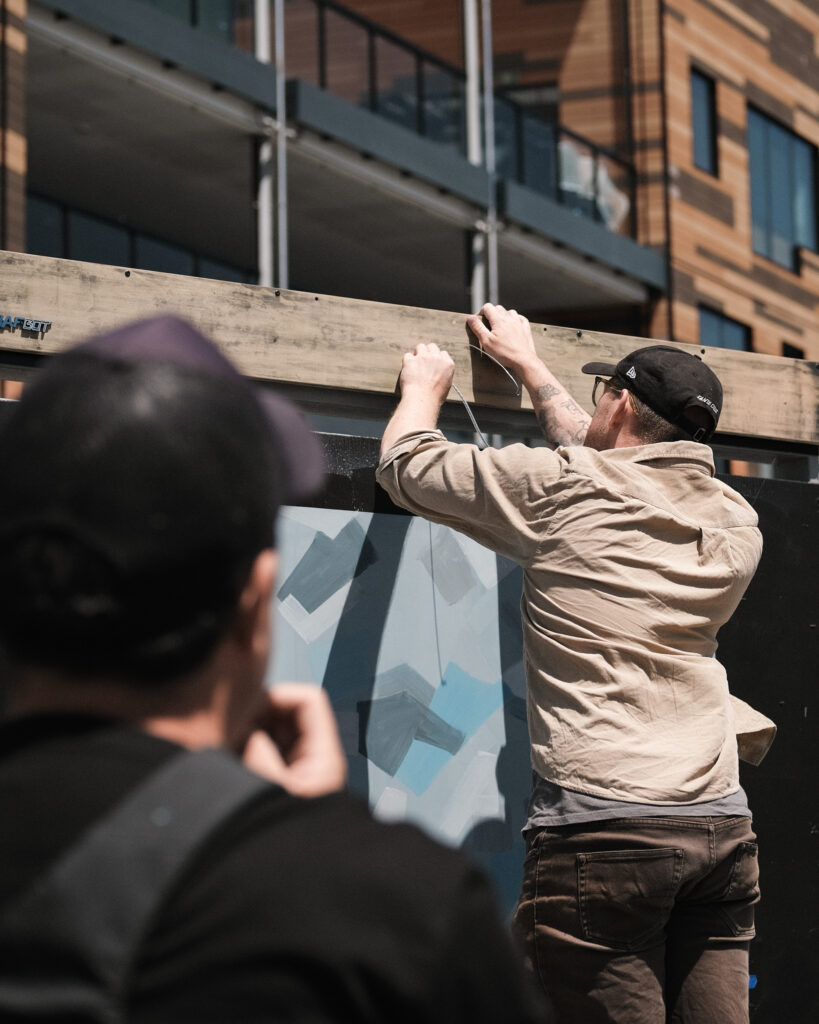
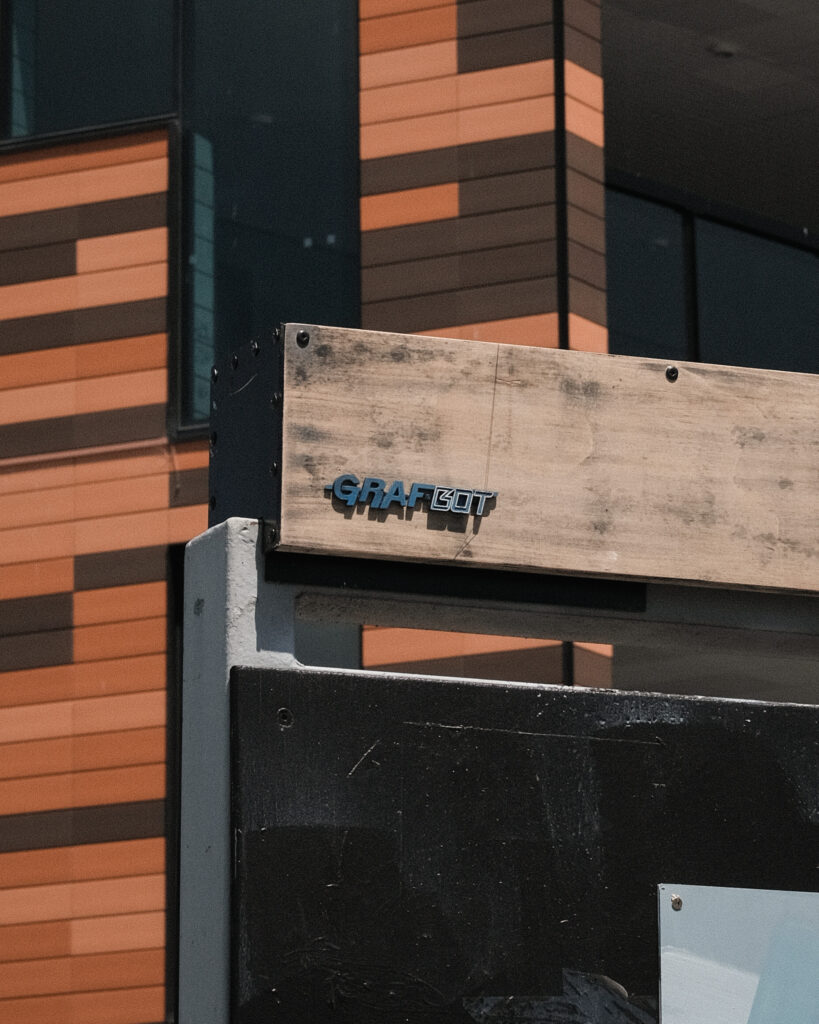
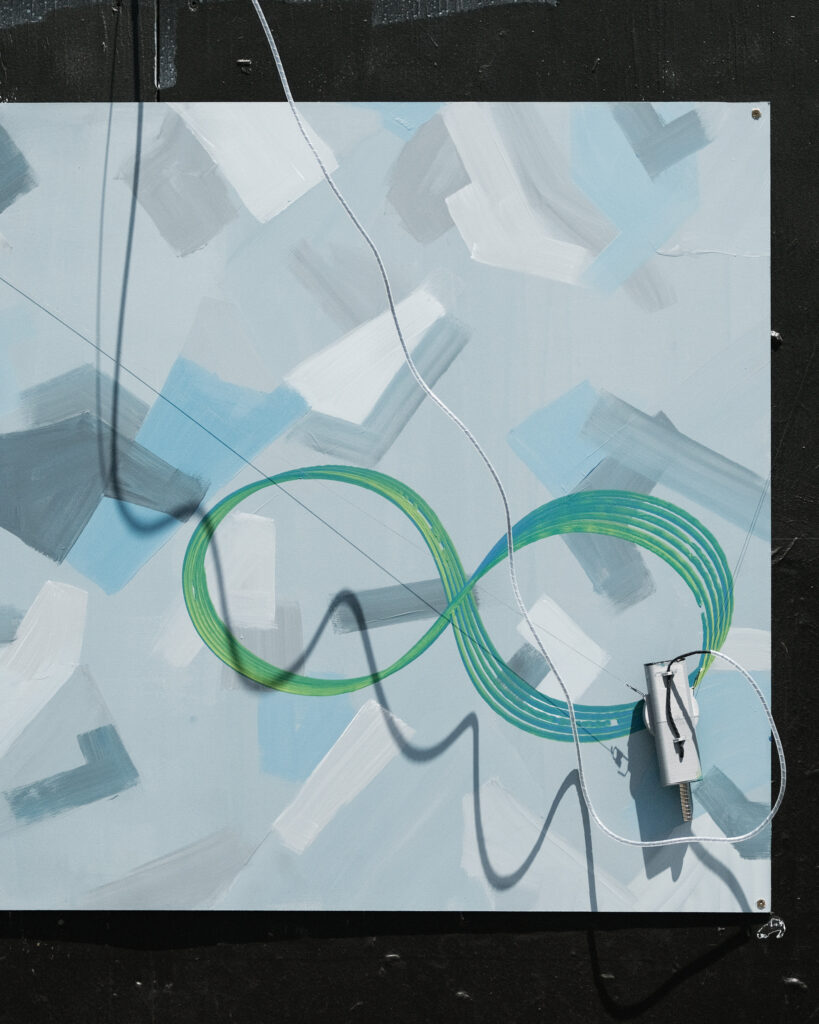
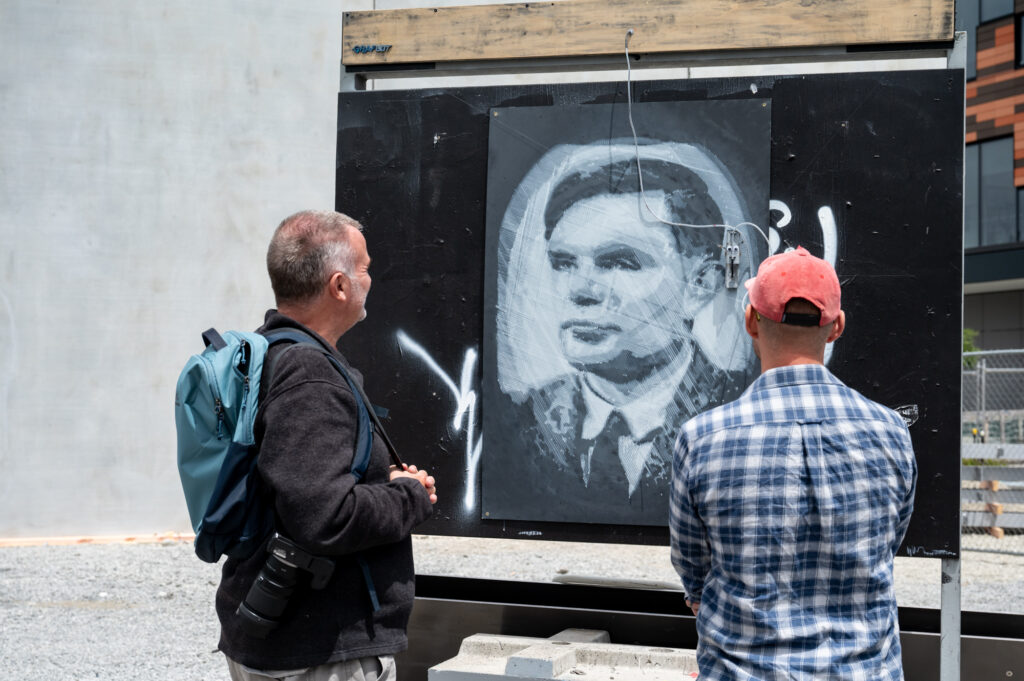
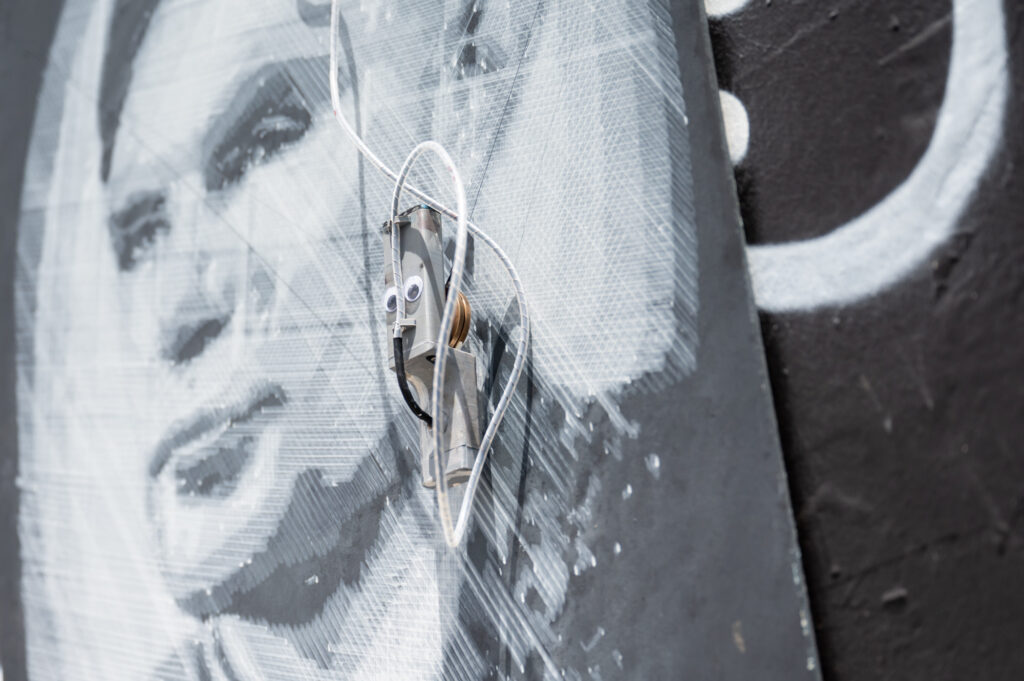
Michael Fox / Yeah Creative – Graf Bot: Exploring the very nature of art making, Yeah Creative designed Graf Bot, an automated painting machine, to operate in public space, mimicking the writing of the city in it’s performative activation. Drawing on the potential, possibility and dilemma of automation in the creative field, Graf Bot explored the meaning, the process and the outcomes of creative endeavour and expression while retaining the importance and directness of public performance. Brought to life by a polar kinematics drawing machine—a kind of wall-mounted plotter that transforms mathematical motion into something surprisingly playful and unpredictable – Graf Bot used two strings attached to anchor points at the top corners of the wall, winding and unwinding these strings with exquisite precision, it guided the drawing medium across the surface in sweeping arcs, loops, and tangles that no viewer can fully anticipate. From a technical translation—turning coordinates into lengths of string—Graf Bot became a whimsical performance, seemingly hesitating, darting, wandering, and improvising. Yeah Creative is the alias of Michael Fox — part designer, part artist, part restless tinkerer. His work plays in the tension between old-school craft and cutting-edge tech, constantly bending traditional art forms into something new and contemporary. His practice thrives on curiosity—shifting between mediums and techniques to serve the idea before the tool. Never bound to one medium, Fox follows the spark of an idea wherever it leads — from pixels to paint, code to concrete. Graf Bot brought Fox’s curiosity into the streets, where the city and its people become part of the artwork itself.
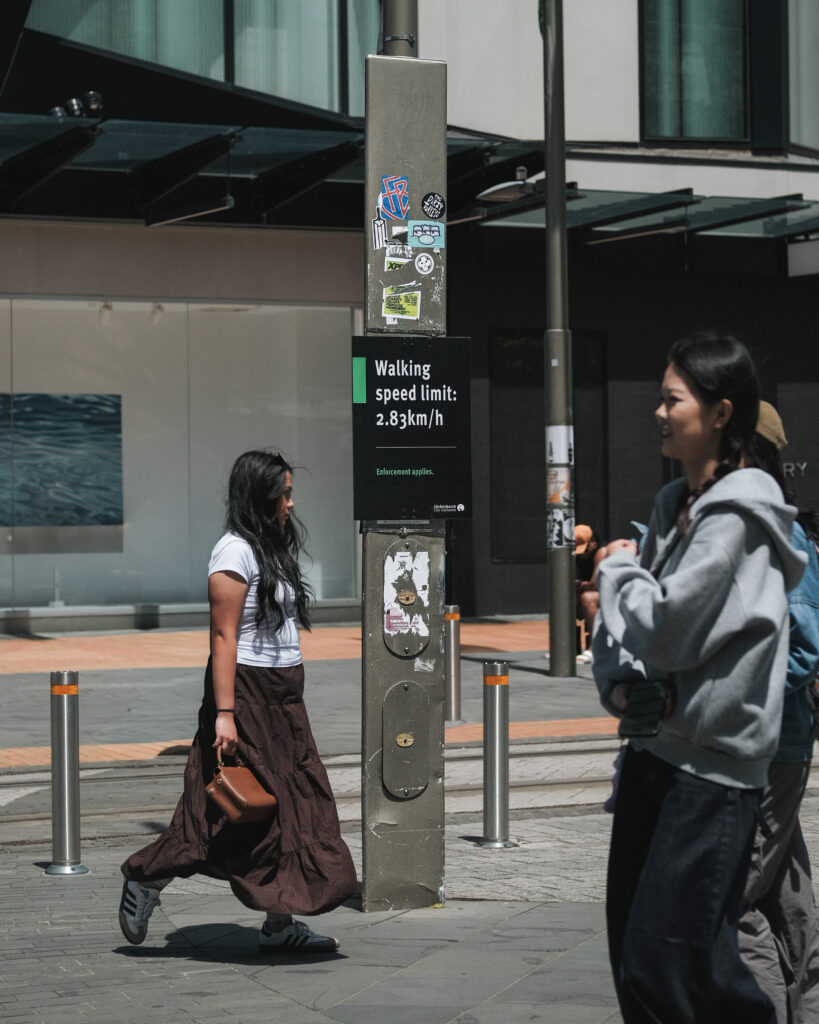
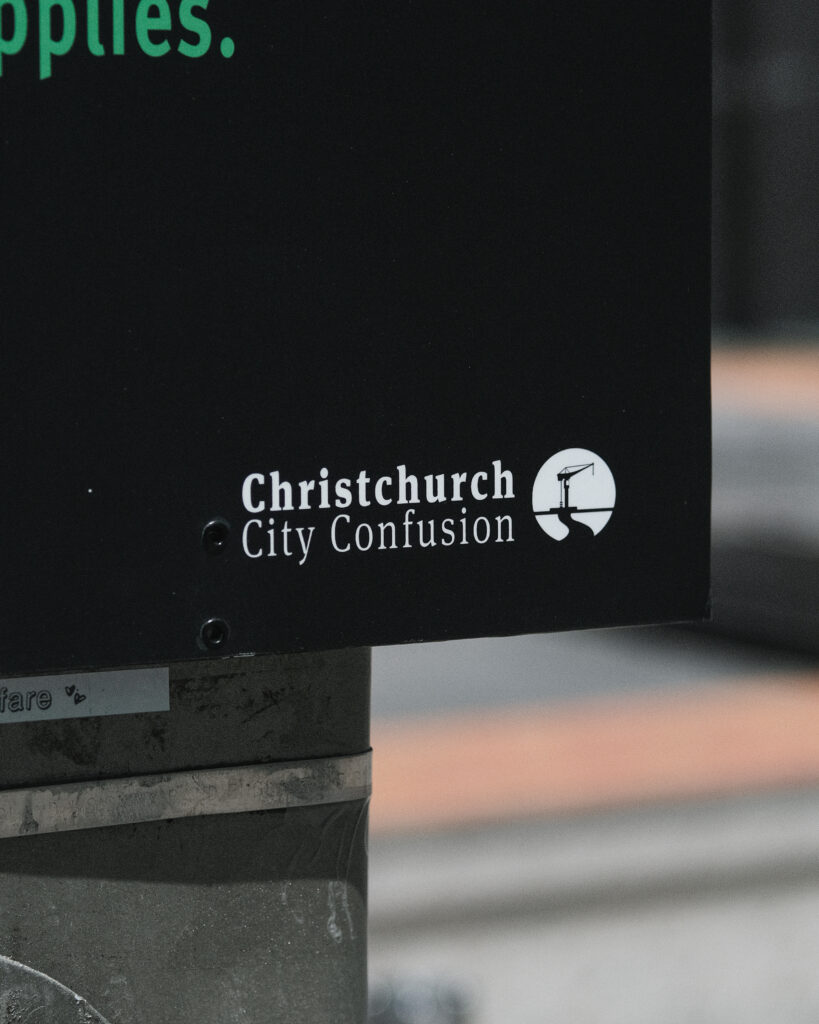
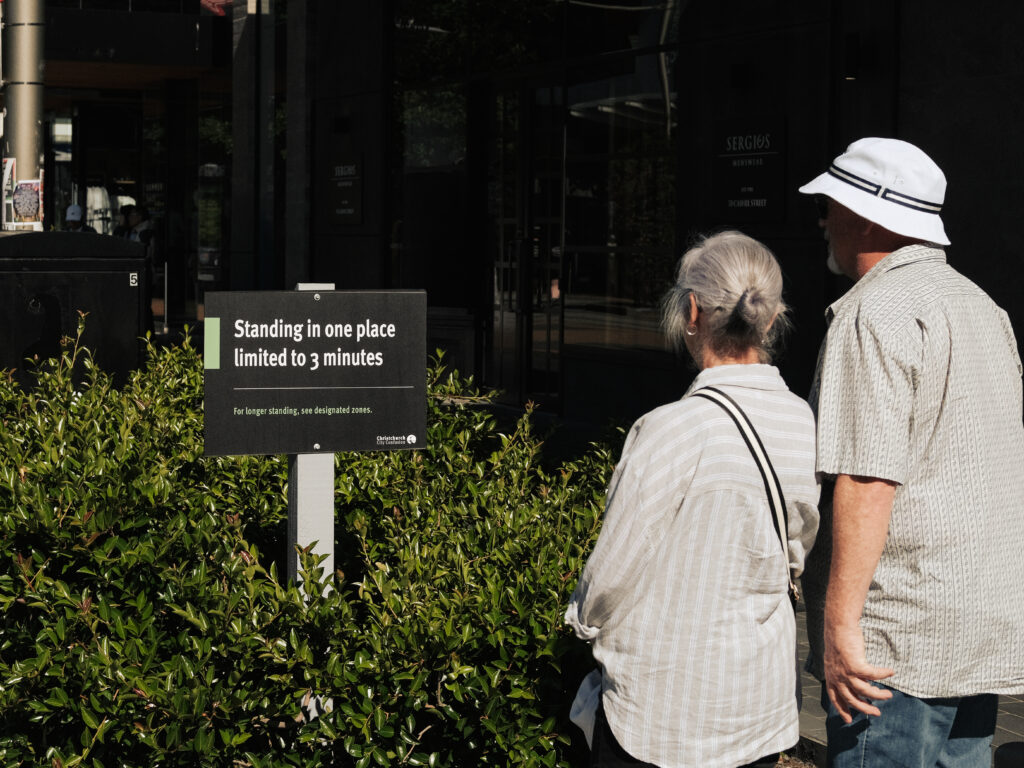
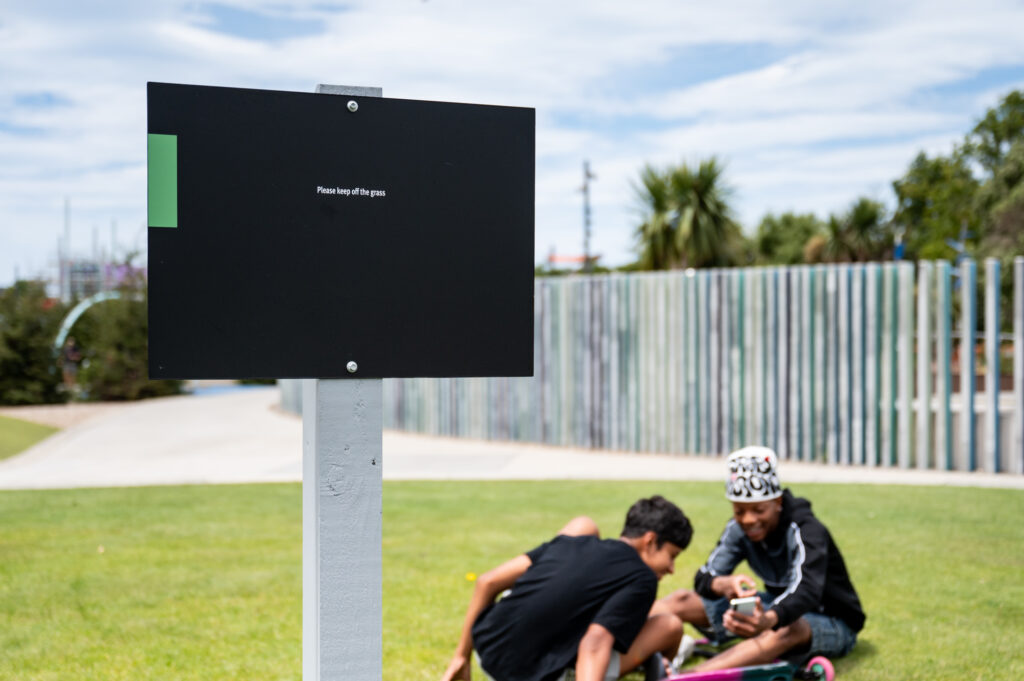
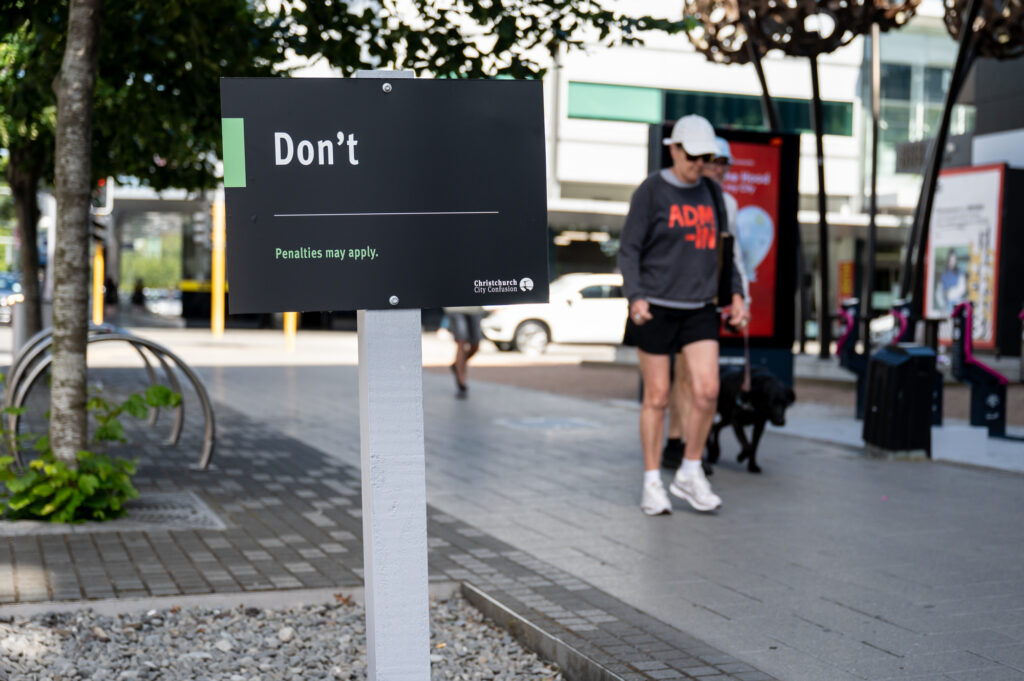
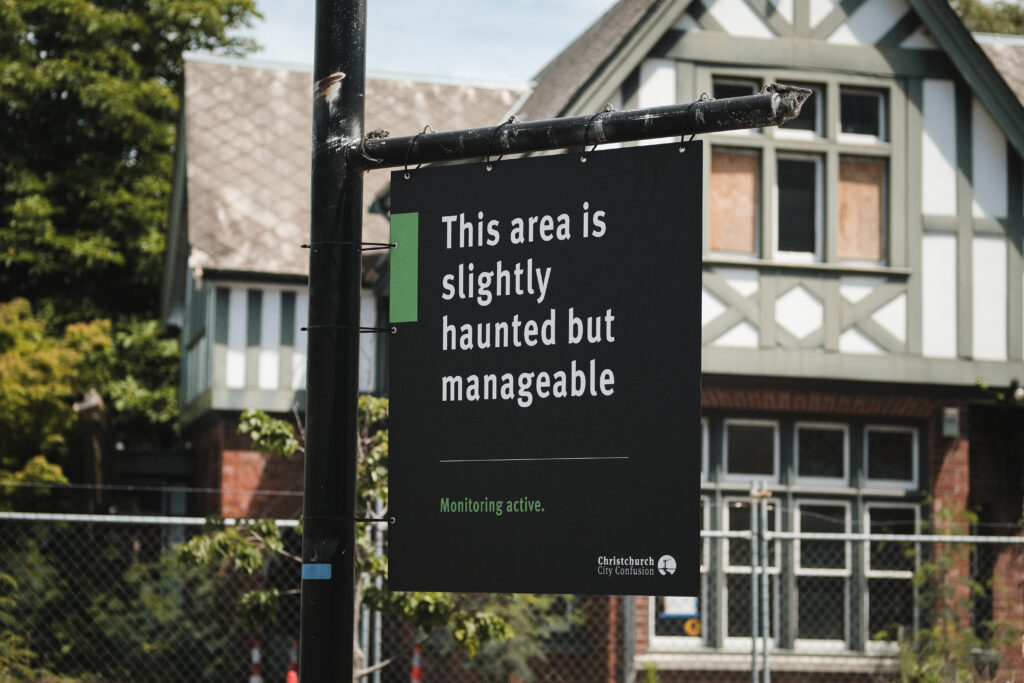
Cameron Hunt – Probably Important: Signs. The signs are everywhere, literally. Signs are so ubiquitous throughout the urban environment, they become almost invisible. We no longer read them, instead relying on our semiotic understanding to make assumptions about their messaging and instructions. Not only are signs symbolic of the highly controlled nature of our urban environments, they also reveal much about our behaviour, expectations and performance in public spaces. It is upon closer inspection that we can see the fascinating juxtaposition of signage that plays out across the city – arrows in all directions, highly specific information and vaguely insufficient dictums, signs that reveal public contracts and private control, ‘dos and don’ts’, stories and statements… Cameron Hunt’s surprising pieces, hidden in plain sight, playfully riffed on this reality, combining absurdity and subtlety, leaving us to question our surroundings. Installed as temporary signs but in a guerrilla manner, the works slowly vanished, but while they existed in the cityscape, they captured the attention of many (and even more online) – some confused, some angry (one figure declaring they were going to write a letter to the Mayor), many simply seeing them for what they were – a chance to smile and laugh at ourselves and our surrounding environment. Probably Important brought Cameron Hunt’s clever, playful sense of creative mischief to The Little Street Art Festival, blurring the line between a festival project and an interventionist prank – people were able to discover the presence of the signs as they moved throughout the city – some in on the joke, others exasperated by the apparently overly officious instructions. Intentionally drawing from the aesthetics of the City Council’s signage (albeit with a cleverly amended civic logo), the project recognised the conditioning of urban semiotics and our tendency to believe what looks believable. From walking speed limits to restrictions on standing still, the suggestion of the supernatural, and vague details, the absurd instructions tread a fine line. Going viral for their impact, the signs were a reminder that art in the streets is as much about the ability to affect the viewer as their aesthetic qualities.
With just days until the 2026 festival kicks off, we are once again excited by the possibilities presented by the upcoming artists and their projects. A constantly evolving festival that embraces possibility and the spirit of creativity, we can’t wait to share the line-up for this year, and the programme of events that will bring the festival to life!