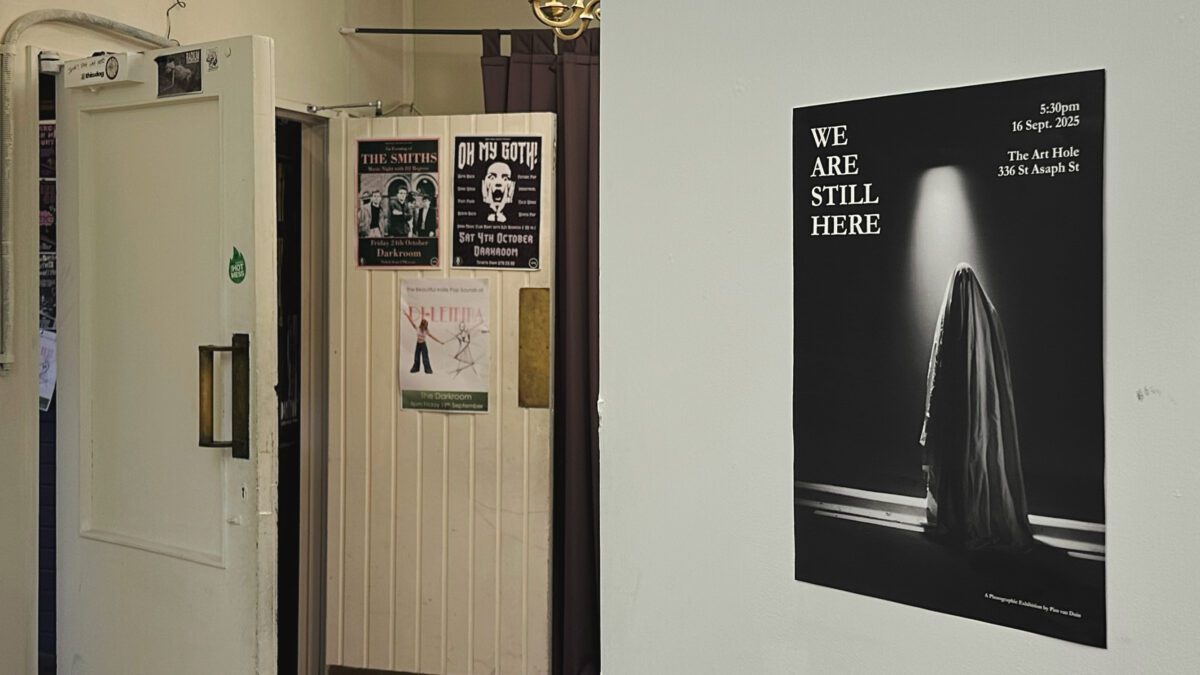
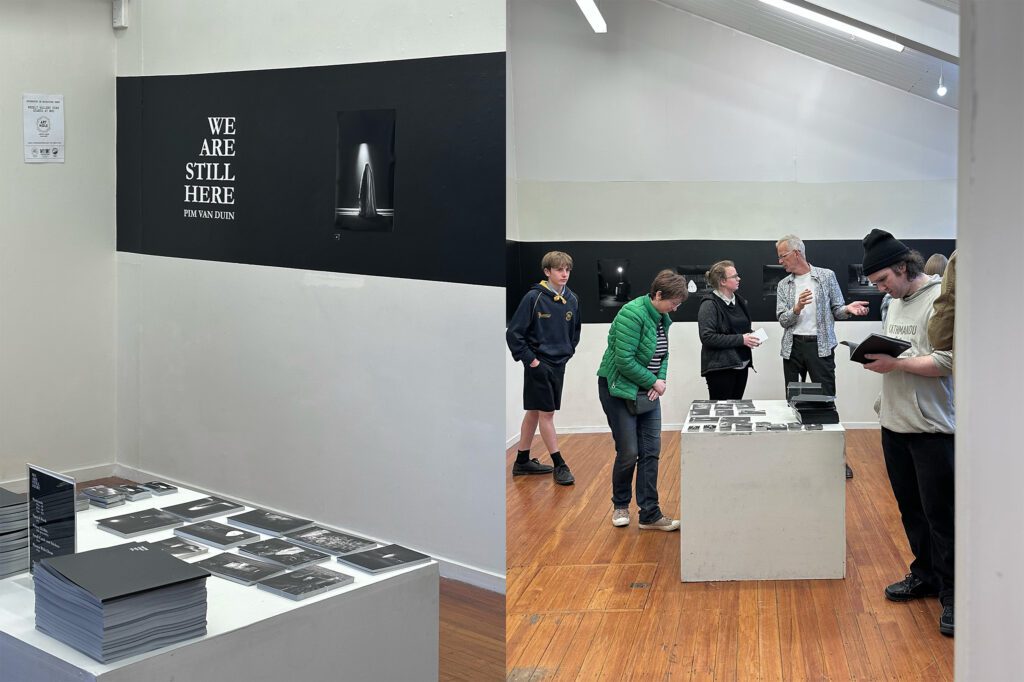
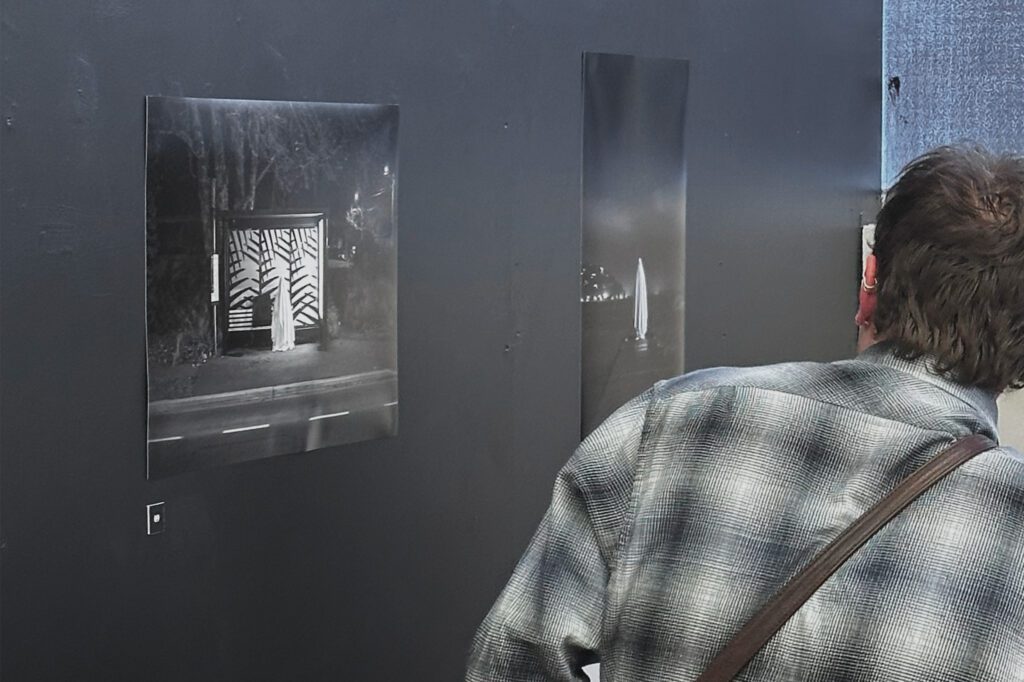
We Are Still Here is a simple concept — a figure dressed in a rudimentary sheet-slash-ghost costume photographed in locations around Ōtautahi. Yet in all its simplicity, Pim van Duin’s collection of striking black and white photographs is one my favourite exhibitions of 2025 — simultaneously charming, playful, evocative and haunting. Much like the ghost costume used in the project (also on display alongside the photographs and publication), We Are Still Here is layered. Surveying and inspecting the photographs, all shot in the existing lighting of the after-dark locations, it was hard not to be gripped with a sense of bittersweet whimsy, like looking at those creepy old Halloween photos, where the line between terrifying and cute is hard to locate. Stopping by The Art Hole, we spoke with Pim about We Are Still Here‘s origins, the process and the unexpected poignancy that a ghost costume can add to an environment…
How did We Are Still Here come about?
Pim van Duin: It came about as a continuation of my final project at ARA last year, where I was looking at stories of Christchurch that had been lost or hidden, and using a ghost as a metaphor for that, and taking photos of some of my friends in these places to kind of evoke that there’s still something there, something missing. But I kind of like taking the photos a lot and kind of the storytelling and narratives you can just add to a place by adding this ghost in. It kind of just continued on from there.
It seems to balance playfulness with that kind of haunting aspect, because you are talking about loss and things that have changed. Was that always a line that you wanted to tread? Because I feel like a lot of your works always had a great sense of humour, but there’s always these underlying quite touching elements to your work as well…
Pim van Duin: I think it plays on, I guess, the absurdity of it all, whereas it can be both quite humourful and playful. But if you look at it in a slightly different way, there’s that feeling of perhaps unease underneath, or this feeling of loss or maybe like a deeper meaning. Because it is a little bit absurd to have a person underneath a sheet with holes cut out of it, but for some reason, it evokes so much more emotion than that itself.
I guess it maybe is because you automatically think of dressing up as a child, so there’s a nostalgic element, or the fact that it clearly is, you know, made from that material that you would use as a kid, so there’s a kind of lowbrow, DIY part to it, or it might be the black and white images that add to that sense of meaning. Maybe all of those elements combine to create a layered impact. How would you actually describe the nature of the project? Is it a photography project or is it something bigger? Because part of the exhibition, of course, is the costume itself, and the act of creating the photographs is kind of a performance…
Pim van Duin: I think it started off as like a little fun photography project with my friends and then it kind of bloomed into something a little bit more. I think it’s still primarily photography-based, but it’s less, in some ways, less fun and more like almost like a documentary series. I think that’s kind of where in my head it is. Because not only am I documenting certain places around Christchurch that maybe wouldn’t necessarily be documented anyway, but adding the ghost adds another layer of that of storytelling and narrative where people start to ask, what stories have happened here? What has happened in this place that may have been lost or hidden, or isn’t well known to people?

How carefully selected were the locations? They range all the way from New Brighton and suburban areas to the central city. Did you carefully plan or leave an element of chance to the settings?
Pim van Duin: It was a little bit of both. It started off quite a lot in the centre of Christchurch because that’s where the original ARA project took place. But I kind of branched out to different areas, mainly because I’d been there before or thought they’ll be interesting. I had a list of like potential ghost photos, like ‘ghost on the beach’ or ‘ghost in this place’ and ‘ghost in that place’. Most of the time I had a rough idea of maybe one to three photos I wanted to take on that shoot, but because we would walk around in that environment, we would be able to find other places that I wouldn’t have thought of. It only takes five minutes or so to take a few ghost photos in a particular location, so when you take it, good, but if it doesn’t work, it doesn’t work.
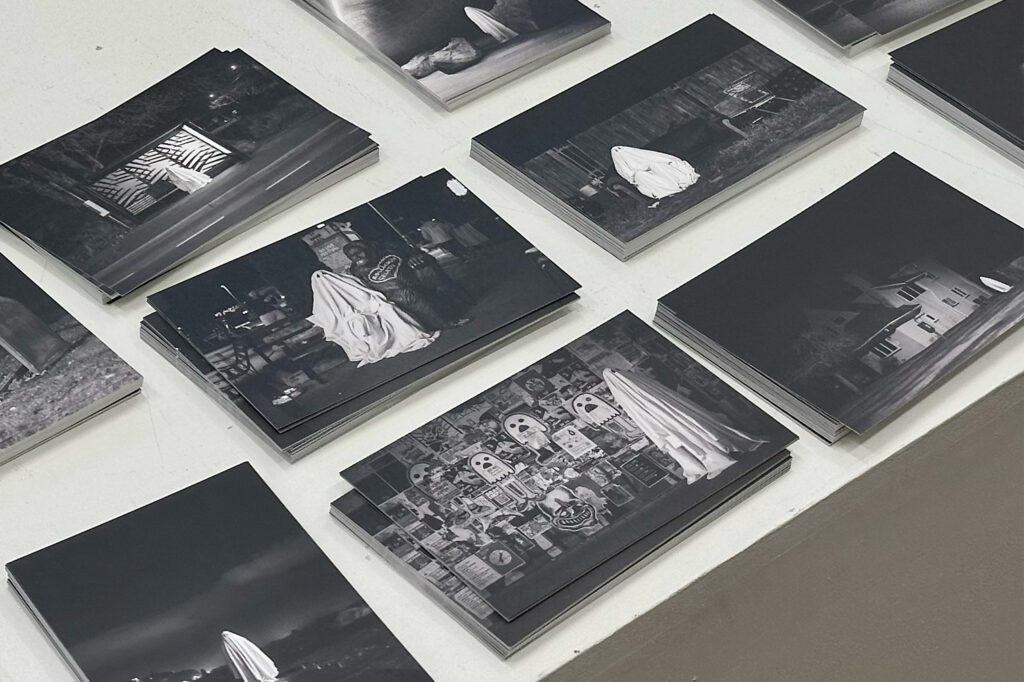
We Are Still Here can be viewed by arrangement until tomorrow, September 20th, so if you wanted to see the work for yourself, chat with the artist, or purchase a copy of the publication you can reach out to Pim directly via Instagram.